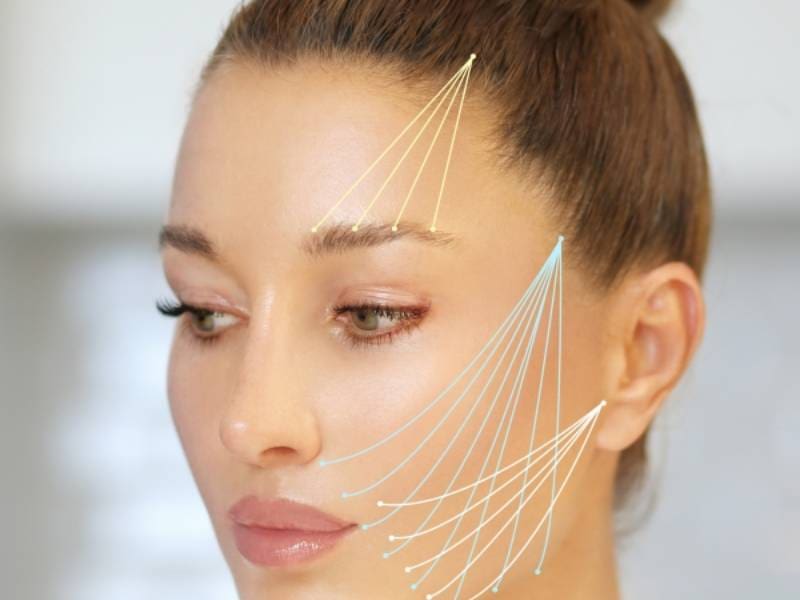
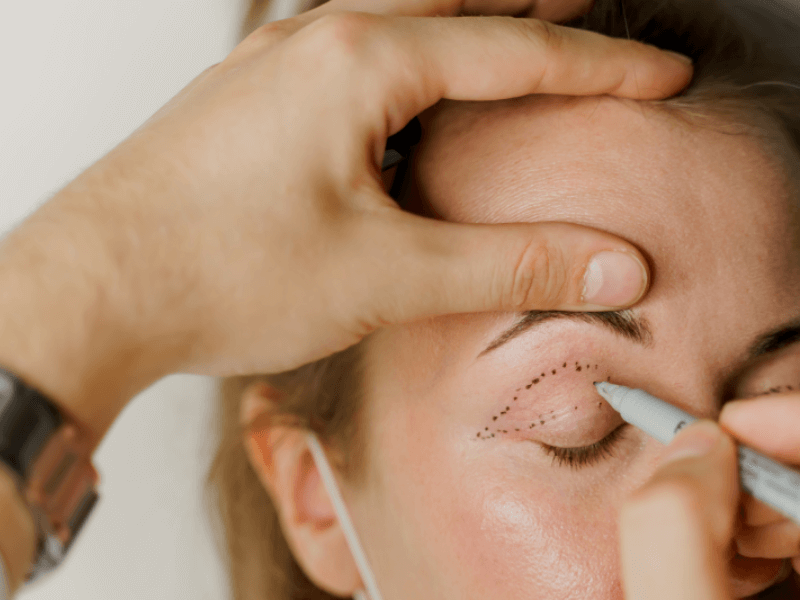
“An endoscopic brow lift is a surgical procedure performed through small scalp or hairline incisions to release and reposition selected forehead and brow soft tissues.
There is no single standardized endoscopic brow-lift technique. Surgical methods differ in incision placement and number, tissue plane, extent of release, management of the brow-depressor muscles, and the method used to secure the repositioned tissues. These technical differences can affect both the stability of brow elevation and the potential complication profile.
Before surgery, the doctor should determine whether brow descent is acquired or simply reflects the patient’s natural anatomy. The assessment should also distinguish brow ptosis from excess upper-eyelid skin, true eyelid ptosis, and compensatory frontalis activity.
The examination should include medial, central, and lateral brow position with the frontalis muscle relaxed, forehead height, hairline position and density, pre-existing asymmetry, previous forehead or eyelid procedures, upper-eyelid skin, eyelid-margin position, levator function, facial nerve function, eye closure, and ocular-surface health.
Adequate release of the relevant tissue planes is necessary before fixation. Insufficient release of retaining structures may limit brow movement or contribute to an unstable or undercorrected elevation.
The fixation method should be documented because different systems do not have identical mechanical properties or clinical profiles. Reported methods include cortical or bone-tunnel fixation, sutures, screws, absorbable fixation devices, and tissue adhesives. Evidence does not currently establish one universally superior fixation method.
The scalp incisions are usually placed within or near hair-bearing areas, but they still create surgical scars. Possible incision-related concerns include visible or widened scars, localized hair loss, altered hair growth, and changes in the hairline. Alopecia and sensory changes are among the more commonly reported complications of endoscopic brow lifting.
The forehead and temporal region contain important sensory nerves, blood vessels, and branches of the facial nerve. Temporary or persistent numbness, altered sensation, scalp discomfort, or weakness of forehead movement may occur when these structures are affected.
An endoscopic brow lift may soften selected forehead or glabellar lines when the relevant tissues are addressed as part of the surgical plan. It should not, however, be presented as a procedure that guarantees complete removal of forehead wrinkles, frown lines, or crow’s feet.
No endoscopic brow-lift technique can guarantee perfect symmetry, an invisible scar, permanent brow elevation, a completely pain-free recovery, or an exact match to a preoperative simulation.
Possible concerns include swelling, bruising, headache, itching, numbness, alopecia, incision-site problems, infection, hematoma, asymmetry, undercorrection, overcorrection, an unnatural or surprised appearance, recurrent brow descent, forehead contour irregularity, nerve-related symptoms, and the need for additional treatment.
The goal is to reposition the contributing brow and forehead soft tissues in a controlled manner while preserving natural facial expression, forehead movement, comfortable eye closure, and the patient’s individual facial characteristics."
Dr. Nguyen Thi Ly Na, Senior Specialist



 BOOK A SPECIALIST CONSULTATION





 REGISTER FOR VIP CONSULTATION WITH THE DOCTOR