“A naturally low brow position and acquired brow ptosis are not necessarily the same condition. Brow position varies between individuals, and mild differences between the two sides are common.
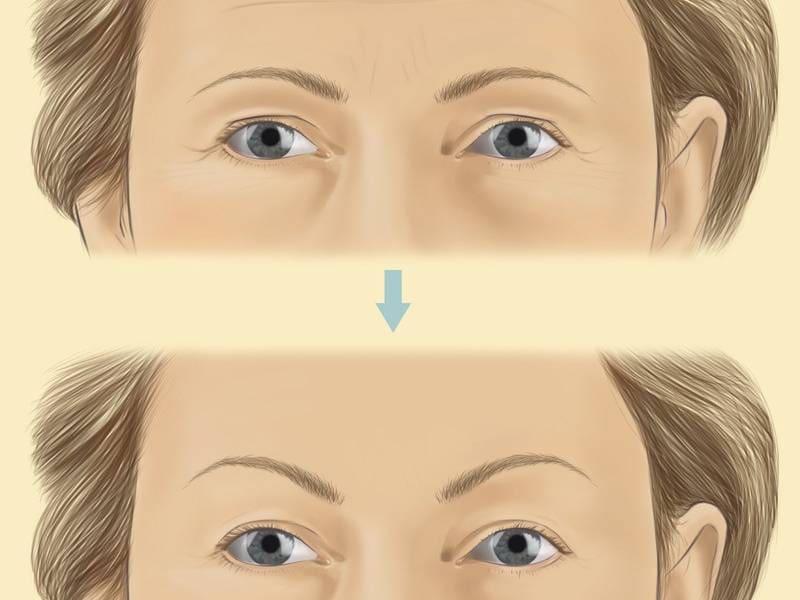
Brow ptosis refers to downward descent of part or all of the eyebrow. It may create a cosmetic concern or contribute to upper-eyelid hooding. However, a heavy-looking upper eyelid may also result from excess eyelid skin, true eyelid ptosis (drooping of the upper eyelid), brow compensation, or a combination of several factors.
Before recommending treatment, the doctor should assess the medial, central, and lateral portions of the brow while the frontalis muscle (the forehead muscle that helps raise the eyebrows) is relaxed. The examination should also consider forehead height, hairline position, pre-existing asymmetry, upper-eyelid skin, eyelid-margin position, levator function (the function of the muscle and tissues that lift the upper eyelid), frontalis compensation, eye closure, facial-nerve function, and ocular-surface health.
A direct brow lift, endoscopic brow lift, thread brow lift, and subbrow or infrabrow skin excision are different procedures with different goals and techniques.
A direct brow lift removes a selected segment of skin and soft tissue within or immediately above the eyebrow. It provides precise control over brow position but creates a scar close to the eyebrow and may cause temporary or, in some cases, persistent changes in forehead sensation.
An endoscopic brow lift uses small incisions in the scalp to release and reposition selected forehead and brow tissues. The incisions are placed within or near the hair-bearing scalp. However, visible scarring, hair loss, sensory changes, asymmetry, undercorrection, or overcorrection may still occur.
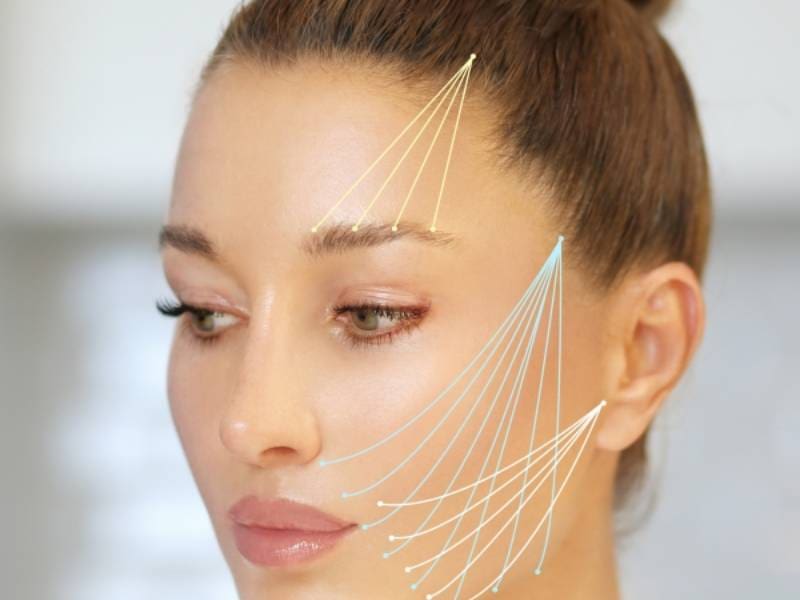
A thread brow lift places suspension threads within the soft tissues to provide temporary support. It may offer a temporary change in selected patients with mild-to-moderate brow descent. The lifting effect may decrease over time, and complications such as swelling, bruising, dimpling, visible or palpable threads, thread extrusion (threads becoming exposed through the skin), infection, asymmetry, or nerve-related symptoms may occur.
Subbrow or infrabrow skin excision primarily removes excess upper-eyelid skin through an incision below the eyebrow. It can reduce upper-eyelid skin excess in selected patients, but it does not automatically elevate the eyebrow and should not be considered interchangeable with a true brow lift.
True eyelid ptosis should also be assessed separately. Raising the eyebrow or removing excess upper-eyelid skin does not directly correct the eyelid-elevating mechanism. If ptosis is present, the muscles and tissues responsible for lifting the upper eyelid require separate assessment and, when appropriate, specific ptosis treatment.
No brow procedure can guarantee a perfect eyebrow proportion, complete symmetry, scar-free healing, or a permanently fixed brow position. The goal is to address the underlying cause as conservatively as possible while preserving natural facial expression, comfortable eye closure, and the patient’s individual facial characteristics.”
Dr. Nguyen Thi Ly Na, Senior Specialist













 REGISTER FOR VIP CONSULTATION WITH THE DOCTOR


