“Eyelid revision surgery is not a single standardized procedure. The treatment plan depends on the original procedure, which eyelid structures were altered, the amount of remaining skin and soft tissue, scar tissue adhesion, eyelid-margin position, levator function (the function of the muscle and tissues that lift the upper eyelid), eye closure, and ocular-surface health.
A result that appears uneven during early healing does not necessarily require immediate treatment. Swelling, scar firmness, and crease height may continue to change during the healing process. However, functional concerns such as incomplete eye closure, corneal exposure (exposure of the clear surface of the eye), significant eyelid retraction, rapidly increasing swelling, severe pain, or visual symptoms require prompt medical assessment and may require earlier intervention depending on the cause and severity.
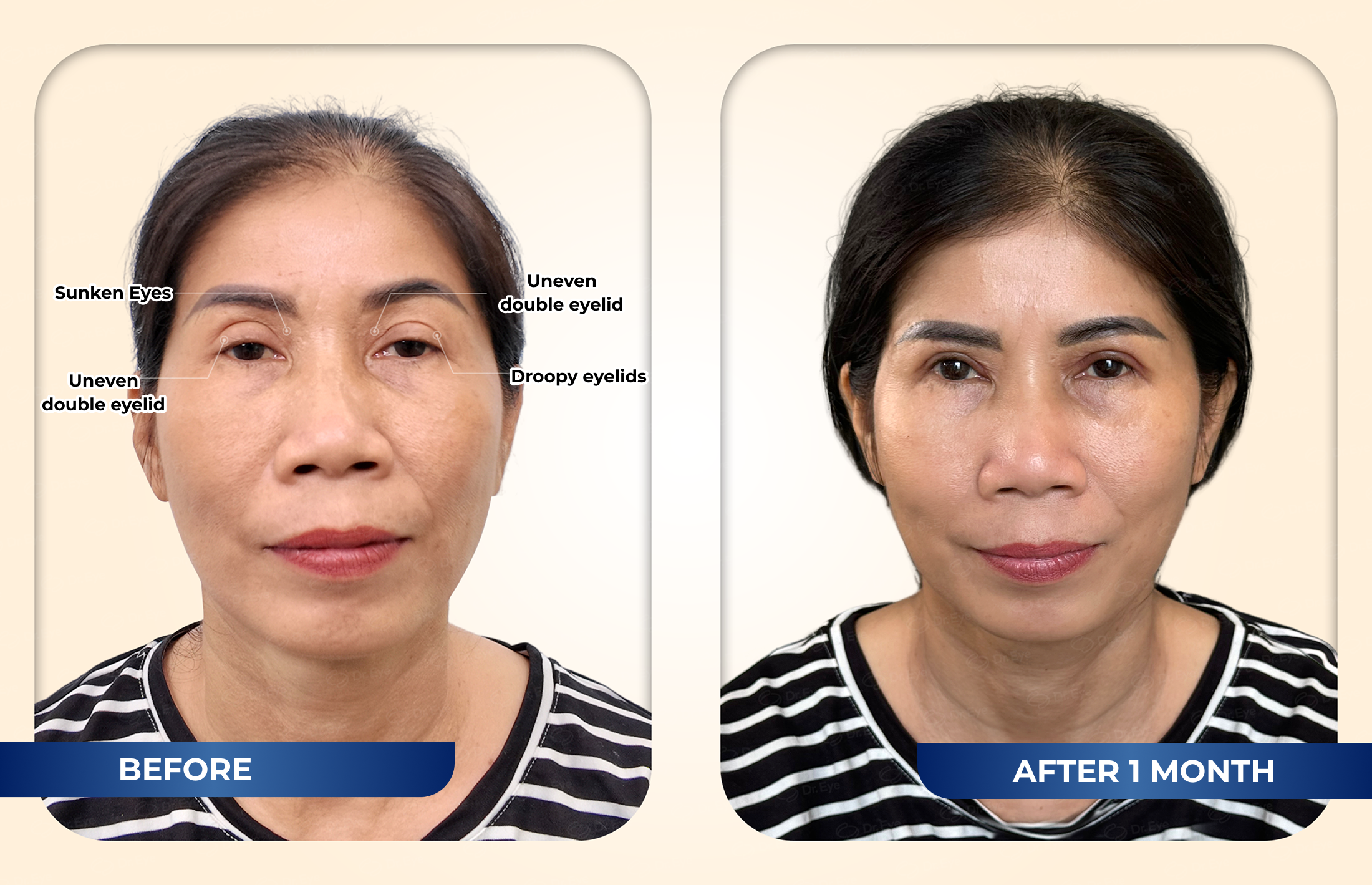
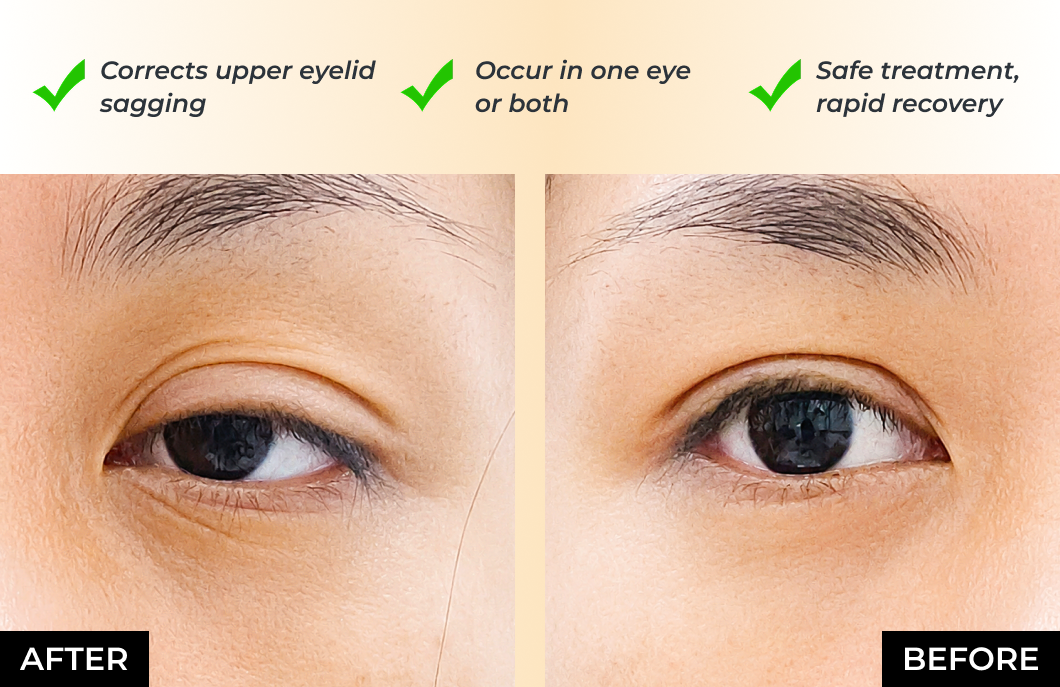
Upper-eyelid revision may address a weak or lost crease, a high or deep crease, multiple creases, scar tissue adhesion, upper-eyelid hollowing, residual or postoperative ptosis (drooping of the upper eyelid), eyelid retraction, or insufficient skin for comfortable eye closure.
Lower-eyelid revision involves different anatomical and functional concerns, including scleral show (visible white of the eye below the iris), lower-eyelid retraction, ectropion (outward turning of the eyelid), entropion (inward turning of the eyelid), canthal distortion (changes in the shape or position of the outer or inner corner of the eye), tearing, and ocular-surface exposure. Upper- and lower-eyelid revision should therefore be assessed and explained separately.
A high or deep upper-eyelid crease may require release of abnormal scar attachments and reconstruction of a smooth tissue plane that allows the eyelid tissues to move naturally. Selected patients may also require tissue interposition, fat preservation, fat transposition, or fat grafting (transferring fat tissue to restore volume). Lowering the crease is not achieved simply by creating another incision below the previous crease.
Upper-eyelid hollowing may result from excessive tissue removal, scar retraction, fat displacement, volume loss, or a combination of these factors. Fat grafting is only one possible treatment option. Existing orbital tissue (tissue within the eye socket) may sometimes be preserved or repositioned, while scar tissue that restricts normal eyelid movement may require release.
True eyelid ptosis (drooping of the upper eyelid) should be distinguished from a high crease, hollowing, or skin shortage. When the upper-eyelid margin sits low, the muscles and tissues responsible for lifting the eyelid require separate assessment. If ptosis correction is included, the specific technique should be clearly identified based on the underlying cause.
Incomplete eye closure may result from skin shortage, scar contracture (tightening of scar tissue), eyelid retraction, excessive fixation, or dysfunction of the eyelid-elevating mechanism. Treatment may involve scar release, tissue redistribution, skin grafting, or another reconstructive procedure, depending on the cause and severity.
Revision surgery cannot always restore tissue that was previously removed or recreate the exact anatomy the eyelid had before the first procedure. Perfect symmetry, complete scar removal, a permanently stable crease, and an exact match to a simulation cannot be guaranteed. Additional treatment may occasionally be required.
The primary goals are to protect comfortable eye closure and ocular-surface health, restore a natural tissue relationship that allows the eyelid to move smoothly, and improve the eyelid contour as far as the remaining anatomy safely allows.”
Dr. Nguyen Thi Ly Na, Senior Specialist


 BOOK A SPECIALIST CONSULTATION




 REGISTER FOR VIP CONSULTATION WITH THE DOCTOR