

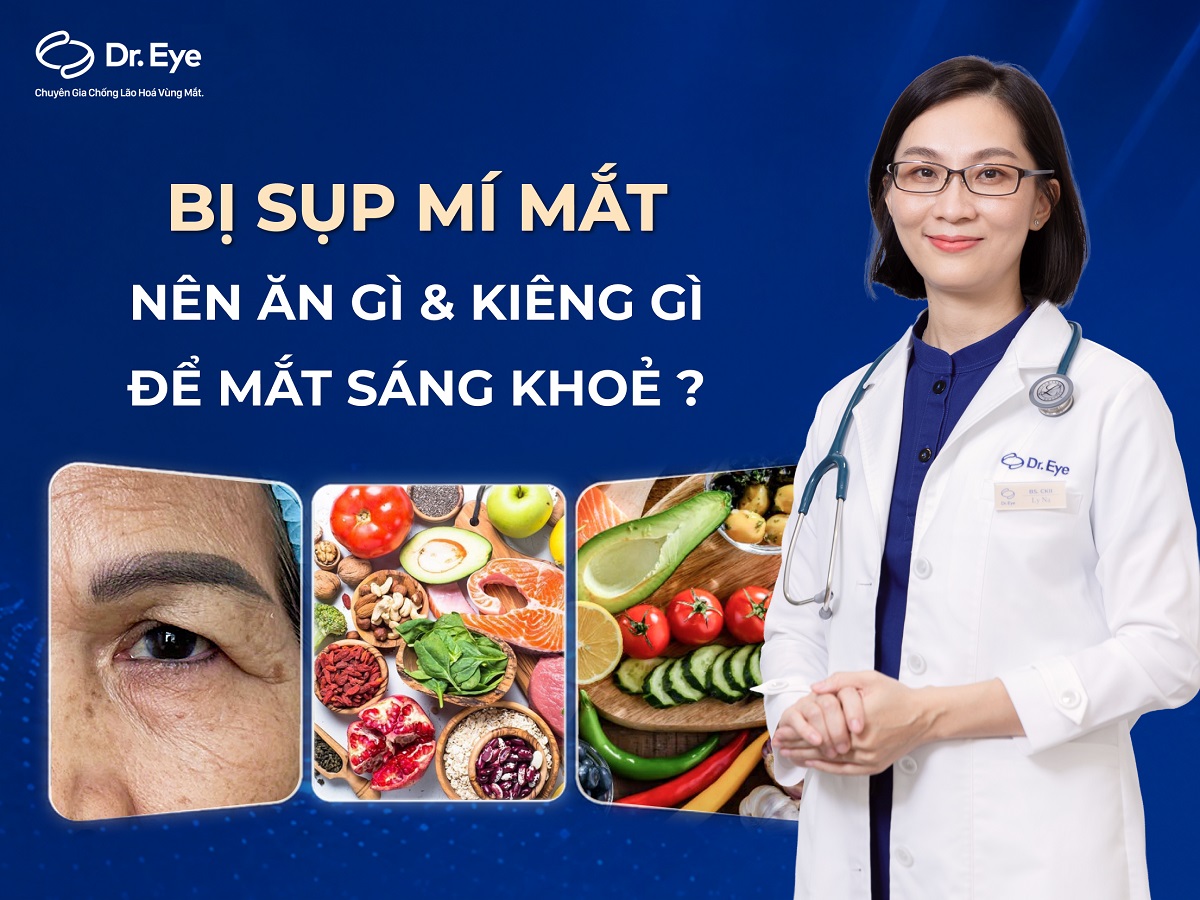
What to eat and avoid for healthy, bright eyes with droopy eyelids?

Consulting doctor:
Dr. Nguyen Thi Ly Na, Senior Specialist
"The article clarifies a crucial point: while good nutrition supports overall well-being and eye health, eating a specific food should not be considered a cure for droopy eyelids. Anyone with low-hanging eyelids needs a proper medical evaluation to determine the underlying cause, particularly if the drooping is sudden, progresses rapidly, or is accompanied by double vision and other neurological symptoms. A balanced diet should always be paired with appropriate specialist check-ups when necessary."
Dr. Nguyen Thi Ly Na, Senior Specialist
Ptosis can make the eyes appear tired, lacking vitality, and in some cases, it may obstruct vision. Therefore, many people who notice their eyelids drooping often wonder what to eat for droopy eyelids, what to avoid with droopy eyelids, and whether dietary changes can help lift the drooping eyelids.
The short answer is: a nutritious diet can support the health of the eyes and body, but food cannot directly lift the drooping eyelid if the cause lies in the levator muscle, muscle tendons, nerves, or eyelid structure. Ptosis can be related to age, trauma, muscle or nerve disorders, previous eye surgeries, and many other causes. Therefore, nutrition should be considered a part of eye care rather than a substitute for examination and treatment.
If you are experiencing ptosis and are unsure of the cause, the following article from Dr. Eye will help you choose suitable foods, understand which items do not necessarily need to be avoided, and recognize when ptosis requires early medical evaluation.
What to eat for droopy eyelids? Quick answer
Individuals with ptosis should prioritize a diverse, balanced diet that includes dark leafy greens, colorful vegetables, fruits, fish, eggs, nuts, beans, and protein-rich foods.
Among these, dark leafy greens and fish rich in omega-3 are food groups often recommended by ophthalmology organizations in the diet.
A diet that supports eye health. The National Eye Institute (NEI) recommends incorporating dark leafy greens and fish rich in omega-3 fatty acids, such as salmon and tuna, into a healthy diet for the eyes.
However, it is important to remember one key principle:
Eating right helps nourish eye health, but no food has been proven to restore eyelid strength or cure all cases of ptosis.
If the eyelids are significantly drooping, covering the pupil, affecting vision, or appearing abnormally suddenly, identifying the cause is more important than simply adjusting the diet.
What is ptosis?
Ptosis, or droopy eyelid, is a condition where the upper eyelid is positioned lower than normal, making the eyes appear smaller or the upper eyelid partially covering the pupil. This condition can occur in one eye or both, ranging from mild to severe.
Some individuals may only notice cosmetic issues. In more severe cases, the upper eyelid may obstruct the field of vision. Patients may sometimes have to raise their eyebrows or tilt their heads to see better.
Ptosis can be present from childhood or develop later. In adults, the causes may be related to changes in the muscles and tendons that lift the eyelids due to aging, trauma, eye surgery, muscle disorders, or nerve damage controlling the eyelids.
This explains whyWhile they are both referred to as “ptosis,” not everyone requires the same approach.
Can nutrition help with droopy eyelids?
Food should not be viewed as a direct treatment for ptosis.
Eyelids are lifted through the coordinated action of the levator muscle, tendon structure, and nervous system. When any of these components encounter issues, consuming a specific vitamin or food is unlikely to reposition the eyelids anatomically.
Depending on the cause and severity, the doctor may consider various treatment options. In some cases, ptosis surgery is performed to adjust the levator muscle, helping to elevate the eyelid position and improve the field of vision.
So why is it still important to consider what to eat for droopy eyelids?
Because a good diet can:
- Provide essential nutrients for the normal functioning of the body and eyes.
- Support the maintenance of retinal health and vision.
- Help the body establish a solid nutritional foundation.
- Assist in managing overall health issues such as blood sugar, blood pressure, or cholesterol through a healthy lifestyle.
- Contribute to maintaining good physical condition if the patient requires treatment or intervention as directed by the doctor.doctor.
The NEI also emphasizes that a healthy diet and physical activity contribute to overall health and may help reduce the risk of conditions that can affect eye health.
8 Food Groups to Prioritize for Those with Droopy Eyelids
1. Dark Leafy Greens
If you are looking for what to eat for droopy eyelids, leafy greens should frequently appear in your meals.
Some easily accessible options include:
- Spinach
- Kale
- Broccoli
- Various green leafy vegetables
- Romaine lettuce
- Peas
Many leafy greens provide lutein and zeaxanthin — carotenoids often mentioned in nutrition that supports eye health. The American Academy of Ophthalmology also lists leafy greens, broccoli, and peas among foods rich in lutein and zeaxanthin.
There is no need to eat just one type of vegetable. A simpler approach is to rotate various vegetables throughout the week for a diverse diet.
2. Omega-3 Rich Fish
Fish such as:
- Salmon
- Tuna
- Mackerel
- Sardines
- Some fatty ocean fish
can provide omega-3 fatty acids.
The NEI specifically mentions salmon, tuna, and some omega-3 rich fish in dietary recommendations.eye health.
This does not mean that eating fish will lift droopy eyelids, but it is a suitable food choice in a balanced diet for those concerned about visual health.
3. Eggs
Eggs are a convenient food, easy to prepare, and can be combined with greens for a balanced meal.
Instead of focusing solely on one type of “eye-healthy food”, those with droopy eyelids should pay attention to an overall diet that includes protein, vegetables, appropriate carbohydrates, and healthy fats.
For example, for breakfast:
Eggs + greens + whole grain bread + a serving of fruit.
This way of eating is also much more practical than relying on a single food in hopes of quickly lifting the eyelids.
4. Yellow, orange, and red vegetables
Carrots are often the first food mentioned when talking about eye health, but they are not the only option.
You can alternate:
- Carrots
- Pumpkin
- Sweet potatoes
- Bell peppers
- Tomatoes
- Other yellow and orange vegetables
Vitamin A plays an essential role in vision and is involved in the function of rhodopsin — a light-sensitive protein in the retina.
However, eating too many carrots cannot cure droopy eyelids. What is necessary stillis a diverse diet rather than relying on a single dish.
5. Fruits Rich in Vitamin C
Oranges, tangerines, grapefruits, kiwis, strawberries, and many other fruits and vegetables are natural sources of vitamin C.
Vitamin C has antioxidant properties and is essential for collagen synthesis in the body.
Some easy options to add to your daily menu include:
- Orange
- Tangerine
- Grapefruit
- Kiwi
- Strawberry
- Guava
- Tomato
- Bell pepper
- Broccoli
Choosing whole fruits is often more reasonable than drinking a lot of sugary fruit juices.
6. Nuts and Legumes
Almonds, walnuts, pumpkin seeds, soybeans, lentils, and many other legumes help diversify your intake of protein, fats, and micronutrients.
You can use:
- A small amount of nuts as a snack.
- Tofu in main meals.
- Lentils or other beans in soups.
- Nuts combined with unsweetened yogurt.
There is no need to buy products marketed as “eye-healthy nuts” at high prices. The important principle remains diversifying food sources and eating in appropriate amounts.
7. Meat, Seafood, and Zinc-Rich Foods
Zinc is a micronutrient essential for many functionsthe body’s functions. The NIH Office of Dietary Supplements states that zinc is involved in many biological processes, including immune function and protein synthesis.
Food sources can vary between:
- Seafood
- Meat
- Eggs
- Milk
- Legumes and nuts
Do not self-prescribe high doses of zinc due to concerns about droopy eyelids. Nutritional supplements may have contraindications or interactions with medications, so it is important to consider actual needs when using supplements.
8. Stay Hydrated
Water does not cure droopy eyelids, but staying adequately hydrated is still part of a healthy lifestyle.
Each person’s water needs vary depending on weight, activity level, weather, diet, and health status. Therefore, it is not necessary to apply a rigid number uniformly to everyone.
If you have heart disease, kidney disease, or have been advised by your doctor to limit water intake, you should follow specific guidelines.
Food Table for Those with Droopy Eyelids
| Food Group | Suggested Foods | Dietary Value | Suggested Usage |
|---|---|---|---|
| Dark Leafy Greens | Spinach, kale, collard greens, broccoli | Provides greens and carotenoids such as lutein and zeaxanthin | Alternate in lunch andevening |
| Fish | Salmon, tuna, mackerel, sardines | Source of protein and omega-3 | Can vary 2–3 fish meals/week depending on personal portion |
| Yellow/orange vegetables | Carrots, pumpkin, sweet potatoes | Provides carotenoids, vitamin A precursors | Steamed, boiled, roasted, or in soups |
| Fruits | Oranges, tangerines, kiwis, guavas, strawberries | Provides vitamin C and various micronutrients | Prefer to eat whole fruits |
| Eggs | Chicken eggs, duck eggs | Protein and various micronutrients | Combine with suitable vegetables and starches |
| Nuts and legumes | Almonds, walnuts, pumpkin seeds, soybeans, lentils | Supplement protein, fats, and minerals | Consume in moderation, limit those heavily salted/sugared |
| Meat and seafood | Lean meat, oysters, shrimp, fish | Protein, zinc, and various micronutrients | Combine a variety instead of eating one type continuously |
| Water | Plain water, water-rich foods | Supports the body’s fluid needs | Drink according to needs and health status |
Note: The food groups above help build a balanced diet and support overall eye health, not a treatment for ptosis.
What should those with droopy eyelids avoid?
This is a very common question. However, those with droopy eyelids need to avoid an important misunderstanding:
Currently, there is no oneA list of foods that must be avoided for all cases of ptosis.
If ptosis is due to the levator muscle, tendon, or nerve, eliminating beef, chicken, eggs, or seafood will not automatically restore that structure to normal.
Instead of overly restricting your diet, you should pay attention to the following principles.
1. Limit foods high in sugar
Sweets, soft drinks, bubble tea, and foods with high added sugar do not need to be completely banned, but should be consumed in moderation.
A balanced diet is more important than completely eliminating a specific item.
This is especially true for individuals with diabetes or metabolic risk, as managing your diet according to your doctor’s guidance is crucial since diabetes is one of the conditions that can lead to eye and vision problems. The NEI also emphasizes the importance of maintaining overall health for protecting vision.
2. Limit salty foods and processed items
Instant noodles, canned foods, snacks, processed meats, and many industrial dishes often contain high levels of salt.
It is important to note that eating salty foods is not considered a direct cause of all cases of ptosis, so it should not be interpreted that simply eliminating salt will resolve the ptosis.
The goal of limiting overly salty foods is to maintain aa healthy overall diet.
3. Do not abuse alcohol
If you are caring for your eye health or preparing for a procedure/surgery, the use of alcohol should be discussed with your doctor, especially if you are taking medication.
If you have a scheduled intervention in the eye area, ask your doctor directly about when to stop alcohol, medications, or supplements instead of relying on hearsay advice.
4. Do not self-prescribe supplements for “ptosis treatment”
There are many products on the market that advertise containing:
- Vitamin A
- Vitamin C
- Vitamin E
- Omega-3
- Lutein
- Zeaxanthin
- Zinc
These nutrients may play different roles in nutrition and eye health, but that does not mean a supplement containing these ingredients can treat ptosis.
In particular, the AREDS/AREDS2 supplement formula has been studied for specific groups of patients with age-related macular degeneration, and is not a default product for all eye issues.
Therefore, if you only have ptosis, you should not self-purchase high-dose vitamins with the aim of “lifting the eyelid”.
Do I need to avoid beef, chicken, and eggs if I have ptosis?
If you only have ptosis and have notAfter surgery, there is generally no basis for everyone to avoid beef, chicken, or eggs just because of droopy eyelids.
This is a point that needs to be clearly distinguished between:
Untreated ptosis and the post-operative care phase after an eye procedure or surgery.
After surgery, the care regimen may depend on the intervention method, the condition of the incision, underlying health issues, medications being used, and the specific instructions from the doctor.
Therefore, if you have just undergone ptosis surgery, prioritize the post-operative instructions from the treating doctor rather than self-restricting various food groups based on hearsay.
One-Day Meal Suggestions for Eye Health Care
A simple meal plan may include:
Breakfast
- Eggs
- Green vegetables
- Whole grain bread or suitable starch source
- A serving of fruit
Lunch
- Fish or lean meat
- Green vegetables
- Rice in appropriate amounts
- Vegetable soup
Snack
- Whole fruit
- A small amount of unsalted or lightly sweetened nuts
Dinner
- Fish, tofu, or lean meat
- Colorful vegetables
- Starch in appropriate portions
QuanThe most important thing is not to try to consume a lot of “eye-healthy foods” in a few days, but to maintain a diverse and stable diet over the long term.
What Should Those with Droopy Eyelids Do Besides Eating?
1. Identify the Cause of Droopy Eyelids
This is the most crucial step.
Droopy eyelids can be related to various causes. Therefore, if the condition persists, worsens, or affects vision, patients should be examined by an eye specialist.
An examination can help assess the position of the eyelids, the function of the eyelid lifting muscles, the pupils, eye movement, and related signs to determine the cause.
2. Do Not Attempt to “Lift Your Eyelids” with Folk Remedies
Massage, eyelid taping, eye muscle exercises, or using a specific food may be widely shared online, but one should not assume that they can correct all forms of droopy eyelids.
If the issue arises from structural or neurological factors, delaying a consultation to wait for these remedies to take effect may cause patients to miss the appropriate time for assessing the cause.
3. Regular Vision Check-ups
Severe droopy eyelids can obstruct part of the visual field. In children, noticeable droopy eyelids should be monitored closely as they may affect visual development.
Therefore, do not just focus onThe appearance of the eyes is important, but visual function should be the primary factor to assess.
When Should You Seek Early Evaluation for Droopy Eyelids?
Not all cases of droopy eyelids are dangerous. However, if drooping occurs suddenly or is accompanied by other neurological symptoms, it should be taken seriously.
You should seek medical support promptly if you experience:
- Sudden drooping of the eyelids.
- Double vision.
- Unequal pupil sizes.
- Severe headache or eye pain.
- Difficulty moving the eyes.
- Facial weakness or weakness in the arms and legs.
- Difficulty speaking.
- Difficulty chewing or swallowing.
- Shortness of breath.
- Decreased alertness or other unusual neurological symptoms.
Droopy eyelids can occur in certain neurological conditions such as oculomotor nerve damage, Horner’s syndrome, or myasthenia gravis. Some conditions may be accompanied by double vision, changes in pupil size, muscle weakness, difficulty swallowing, or shortness of breath.
If drooping occurs suddenly with severe headache, double vision, abnormal pupils, weakness, altered consciousness, or shortness of breath, the patient needs urgent medical evaluation rather than waiting for dietary changes.
Will Droopy Eyelids Resolve on Their Own with Proper Nutrition?
It cannot be confirmed that droopy eyelids will resolve solely through diet.
For example, ptosis related to the structure of the muscle or tendon that lifts the eyelid will have a different approach than ptosis related to neurological issues or a muscular condition. The American Academy of Ophthalmology states that ptosis can be associated with aging, trauma, eye surgery, and other conditions.
Therefore, instead of asking:
“What should I eat to fix my ptosis?”
A more useful question is:
“What is causing my ptosis, and does this condition require treatment?”
Experiencing ptosis but unsure of the cause? Don’t just change your diet
If you notice:
- Significant asymmetry between the two eyes.
- One eyelid is drooping more than the other.
- The eyelid covers part of the pupil.
- You have to raise your eyebrows to see.
- Your eyes often feel heavy or fatigued.
- Ptosis affects your vision or aesthetics.
- The condition appeared after trauma or eye surgery.
- You are unsure if you truly have ptosis or just excess skin on the upper eyelid.
then a direct assessment will be more valuable than continuing to try various foods or home remedies to lift the eyelids.
Are you experiencing ptosis and want to know how to address your case?
Please leave your phone numberon the consultation form of Dr. Eye. The consultation team will reach out to assess your condition, provide initial information, and guide you through the appropriate examination steps.
Online consultation information is for initial guidance only and does not replace an in-person examination by a doctor.
Frequently Asked Questions About Diet for Droopy Eyelids
What is the best food to eat if you have droopy eyelids?
There is no single best food for everyone with droopy eyelids. A diverse diet should be prioritized, including dark leafy greens, colorful vegetables, fruits, omega-3 rich fish, eggs, nuts, beans, and appropriate protein sources.
Can eating carrots cure droopy eyelids?
No. Carrots provide carotenoids that can be converted into vitamin A, an important vitamin for vision, but eating carrots cannot address the structural, muscular, or neurological causes of droopy eyelids.
Should I avoid eggs if I have droopy eyelids?
If you only have droopy eyelids and have not undergone surgery, there is no general guideline requiring everyone to avoid eggs solely because of droopy eyelids. If you have recently had surgery, please follow the specific dietary guidelines provided by your treating doctor.
Should I avoid beef if I have droopy eyelids?
There is no beef avoidance diet applicable toEveryone experiences ptosis. Those who have recently undergone eye-area procedures should consult their doctor directly about post-operative care instead of self-restricting.
Can taking vitamins help with ptosis?
One should not expect vitamins to lift the eyelids in every case. Vitamins and minerals play a nutritional role, but ptosis can have various causes related to muscles, tendons, or nerves. Supplements should not be taken in high doses indiscriminately.
Should I see a doctor for mild ptosis?
If ptosis has recently appeared, is becoming more pronounced, causes significant asymmetry between the eyes, affects vision, or causes you concern, it is advisable to see an eye specialist to determine the cause. Sudden ptosis accompanied by double vision, headaches, changes in pupil size, or neurological symptoms should be evaluated sooner.
Is ptosis treatable?
Many cases have treatment options or improvements available, but the choice depends on the cause and severity of the ptosis. In some instances, surgery may be used to adjust the eyelid lifting muscles and elevate the position of the eyelids.
Conclusion: What to eat and avoid if you have ptosis?
When wondering what to eat for ptosis, you may prioritize dark leafy greens, omega-3 rich fish, colorful vegetables, fruits, eggs, nuts, beans, and a variety of protein sources. This forms the foundation of a diet that supports overall eye health.
Regarding the question what to avoid with ptosis, there is no definitive list of foods to exclude.It is essential to avoid certain foods in all cases. More importantly, it is crucial to limit an unbalanced diet, avoid overusing dietary supplements, and not believe that simply eating or omitting a specific food can address the causes of ptosis.
If your eyelids are slightly droopy but persistent, and if your eyes are becoming increasingly asymmetrical or if ptosis is affecting your vision and aesthetics, you should investigate the specific causes.
Unsure about the degree of your eyelid droop?
Leave your phone number at Dr. Eye for initial consultation support regarding your ptosis and guidance on the appropriate assessment steps.
Dr. Eye ensures the confidentiality of client information according to the applicable policy. The content of this article aims to provide health knowledge and does not replace direct diagnosis, recommendations, or treatment from a doctor.
Professional Reference Sources
The content has been cross-referenced with professional information from the American Academy of Ophthalmology (AAO), the National Eye Institute of the National Institutes of Health (NEI/NIH), MedlinePlus, and the NIH Office of Dietary Supplements regarding ptosis, eye health care, and nutrition.
Introduction Dr. Eye
Understanding the desire to preserve the youthful beauty of the eyes for middle-aged women, Dr. Eye offers modern solutions to address all aging issues around the eyes such as sagging eyelids, eye bags, crow’s feet,…

Related articles







 BOOK AN APPOINTMENT


