

Does the non-incisional double eyelid procedure affect vision and the cornea?

Consulting doctor:
Dr. Nguyen Thi Ly Na, Senior Specialist
Over 10 years of experience in oculoplastic and facial plastic surgery.
See more information about the doctorThe key point of this article is to help clients understand the relationship between the non-incisional double eyelid procedure, vision, and the cornea. Although the non-incisional double eyelid procedure does not directly intervene in the internal structure of the eyeball, the risk of surface eye damage still needs to be considered. Before proceeding, the doctor should assess the condition of the eyelids, the history of eye diseases, and choose the appropriate technique. Clients should also be aware of any unusual signs after the procedure to seek timely examination and treatment.
Dr. Nguyen Thi Ly Na, Senior Specialist
Does the Non-Incisional Double Eyelid Procedure Affect Vision and the Cornea?
Does the Non-Incisional Double Eyelid Procedure Affect Vision and the Cornea? This is one of the common concerns among women considering improving their monolid, hidden eyelid crease, or uneven double eyelids. Although the non-incisional double eyelid procedure is a minimally invasive method, the area where it is performed is close to important structures of the eye, leading many to worry about the risk of corneal damage or impact on vision.
In principle, the non-incisional double eyelid procedure does not directly interfere with the cornea or the internal structures of the eyeball, so this method is not intended to change vision. However, it cannot be asserted that the non-incisional double eyelid procedure is completely without risk to the eyes. Some complications related to sutures, infections, or surface damage to the eyeball may still occur.
So, in what situations do these risks arise? How can one distinguish between normal post-procedure symptoms and signs that require examination? Let’s explore in detail with Dr. Eye in the article below.
1. What is the Non-Incisional Double Eyelid Procedure? What Structures Does It Affect?
The Non-Incisional Double Eyelid Procedure is a cosmetic method that uses specialized sutures to create a connection between the upper eyelid skin and the appropriate underlying structures, thereby forming or defining the eyelid crease when the eyes are open.
Unlike the upper eyelid surgery, the non-incisional double eyelid procedure typically does not require a long incision along the eyelid crease. The doctor will identify the intervention points.The design of the eyelid crease is based on anatomical structure and utilizes a suture fixation technique to create a new eyelid fold.
The main objectives of this method include:
- Creating a Defined Eyelid Fold: Improving the condition of monolids, hidden eyelid creases, or indistinct eyelid folds.
- Adjusting Symmetry: Helping to harmonize the eyelid folds on both sides when appropriate.
- Maintaining Natural Contours: Designing the eyelid crease to be compatible with the shape of the eyes and the overall face.
- Limiting the Scope of Intervention: No need for extensive removal of excess skin as with some eyelid surgery methods.
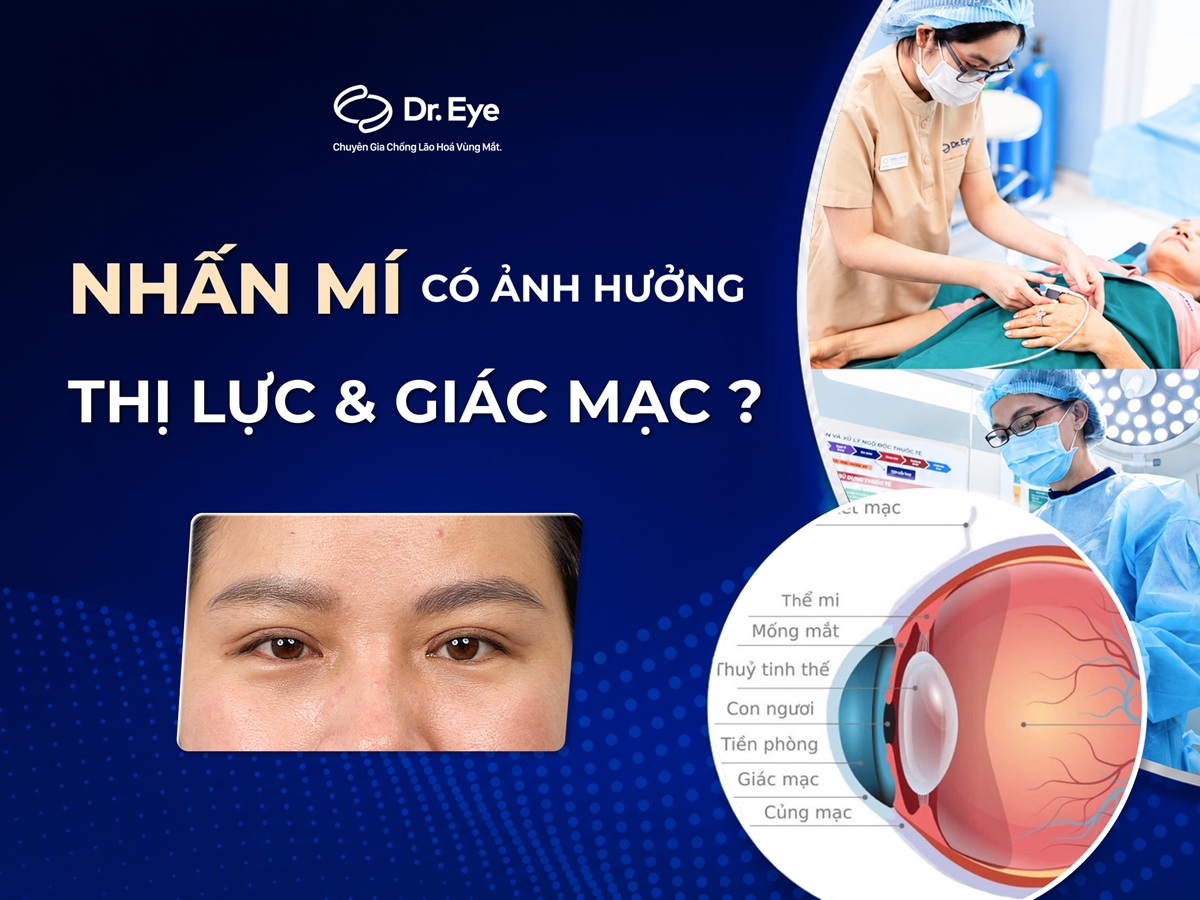
Regarding anatomical structure, the eyelids and cornea are two distinct parts.
The eyelids serve to protect the eyeball and distribute tears across the surface of the eye through blinking. Meanwhile, the cornea is the transparent tissue located at the front of the eyeball, playing a crucial role in refracting light and forming clear images.
Since eyelid crease enhancement primarily affects the upper eyelid tissue, this method does not aim to alter the structure of the cornea, lens, or retina.
However, the eyelids and the surface of the eyeball are closely related. If the sutures are exposed to the inside of the eyelid or cause prolonged irritation, the cornea may still be indirectly affected.
2. Does Eyelid Crease Enhancement Affect Vision?
InThe conditions for performing the procedure correctly indicate that the non-incisional double eyelid procedure does not directly change the eye’s visual function. However, the potential impact on vision needs to be considered during both the recovery phase and in cases of complications.
2.1. Why does the non-incisional double eyelid procedure not directly affect vision?
Vision is the ability to clearly recognize details in images. This function depends on many components of the visual system, including the cornea, lens, retina, and the visual nerve pathways.
Meanwhile, the non-incisional double eyelid procedure is performed to create a fold in the upper eyelid area, not as a refractive adjustment or direct intervention in the light-receiving components of the eye.
Therefore, the non-incisional double eyelid procedure is not a treatment for myopia, hyperopia, astigmatism, or for improving vision.
It is important to distinguish between vision and sight. A more defined eyelid fold may make the eyes appear larger and more aesthetically balanced, but this does not mean that the ability to see clearly is improved.
In particular, in cases where excess skin on the upper eyelid obstructs vision or ptosis is due to abnormal function of the eyelid muscles, the doctor needs to assess the cause before choosing a method. Simply creating an eyelid fold cannot replace true ptosis treatment interventions.
2.2. Is it normal to experience blurred vision after the non-incisional double eyelid procedure?
After eyelid area interventions, some individuals may experience slight blurred vision for a short period. This symptom may be related to the ointment used.eye-area irritation, tearing, or temporary changes to the surface of the eyeball.
However, not every case of blurred vision after the non-incisional double eyelid procedure should be assumed to be a normal recovery reaction.
If there is a significant decrease in vision, prolonged blurred vision, eye pain, or the appearance of unusual accompanying symptoms, clients need to undergo a specialized eye examination to determine the cause.
In particular, a sudden decrease in vision should be evaluated urgently; clients should not self-monitor at home or wait for a scheduled follow-up appointment.
2.3. Can improper non-incisional double eyelid procedure technique affect vision?
The answer is yes.
Some complications related to the suture placement technique or damage to the eye surface can irritate the cornea, thereby affecting visual quality.
A study published in Aesthetic Plastic Surgery in 2023 analyzed 14 patients who experienced complications in the conjunctiva and cornea due to exposed sutures after eyelid crease surgery with buried sutures. Among this group, 8 cases had corneal epithelial damage and 6 cases had corneal ulcers.
This study focused on patients who had complications and does not represent the complication rate for all individuals undergoing the non-incisional double eyelid procedure.
The results indicate that early identification of the causes of eye surface irritation is crucial in managing complications and protecting visual function.
Therefore, even though the non-incisional double eyelid procedure involves a relatively small intervention scope, evaluating the eye structure, selecting the appropriate technique, and monitoring post-procedure are still necessary.is emphasized.
3. Does the non-incisional double eyelid procedure affect the cornea?
The non-incisional double eyelid procedure does not directly impact the cornea. However, there is still a risk of corneal damage if complications arise, such as exposure of the sutures towards the conjunctiva, rubbing against the surface of the eyeball, or infection.
The cornea has many sensory nerve endings. Therefore, even minor injuries to the corneal surface can cause pain, discomfort, tearing, and sensitivity to light.
3.1. Corneal damage due to exposed sutures from the non-incisional double eyelid procedure
In the technique of creating eyelid creases with sutures, the suture material is fixed at specific points within the eyelid tissue.
If the end of the suture or the knot becomes exposed towards the conjunctival surface, they may rub against the cornea during blinking.
Repeated friction can potentially damage the protective epithelial layer of the cornea.
Symptoms to watch for include the sensation of a foreign body in the eye, burning pain, redness, continuous tearing, or light sensitivity.
Notably, complications related to sutures do not necessarily appear immediately after the procedure. Some cases have been reported after a long period, when the end of the suture or knot begins to irritate the eye surface.
Therefore, individuals who have undergone the non-incisional double eyelid procedure and experience prolonged discomfort should inform their specialist about their eyelid intervention history.
3.2. Dry eyes and irritation of the ocular surface
The blinking action plays a role in evenly distributing the tear film, helping to maintain moisture and protect the cornea.
When the eyelids are irritated orAbnormal eye opening and closing activities may lead to a sensation of dryness, burning, or discomfort on the surface of the eyeball.
Dry eyes are a recognized issue following certain types of eyelid surgery. However, data on upper eyelid surgery cannot be directly applied to conclude the rate of dry eyes after a non-incisional double eyelid procedure.
For individuals with a history of dry eyes, blepharitis, or corneal surface abnormalities, it is particularly important to assess the eye condition before any intervention.
3.3. Risk of Serious Damage When Complications Arise
In rare cases, corneal damage may progress to corneal ulcers or more serious ocular complications.
A retrospective study published in 2021 in the Journal of Plastic, Reconstructive & Aesthetic Surgery reported 12 patients with suture-related injuries following eyelid crease surgery using buried sutures, including severe eye injuries.
This data emphasizes that the eyelid intervention technique should be performed by qualified professionals, and any abnormal symptoms after the procedure must be identified and addressed promptly.
4. Distinguishing Normal Recovery Signs from Warning Signs After Non-Incisional Double Eyelid Procedure
After the non-incisional double eyelid procedure, monitoring changes in the eye area helps clients recognize when they can continue care as directed and when they need to see a doctor.
The table below summarizes the commonly observed signs.
| Signs After Non-Incisional Double Eyelid Procedure | Causes ofPossible Occurrences | Recommended Actions |
|---|---|---|
| Mild eyelid swelling | Tissue reaction post-procedure | Monitor and care according to the doctor’s instructions if there are no other unusual symptoms |
| Slight tightness in the eyelid area | Tissue is in the recovery phase | Avoid strong impacts on the eyelid, follow up as scheduled |
| Slight blurriness after applying ointment | The ointment temporarily reduces the clarity of the visual surface | Follow the instructions; if blurriness persists or worsens, a check-up is necessary |
| Continuous foreign body sensation in the eye | May be related to corneal irritation, dry eyes, or sutures | Early eye examination to determine the cause |
| Significant redness, pain, light sensitivity | May indicate corneal damage or infection | Need to see an eye specialist the same day |
| Sudden vision loss, severe pain | Risk of serious eye complications | Go to an eye specialist or emergency care immediately |
Note: The table above is for reference only. Determining the cause requires a direct examination. Do not self-diagnose corneal conditions based solely on external symptoms.
It is important not to be complacent with symptoms of pain, redness, or prolonged blurriness after the non-incisional double eyelid procedure. These may be signs that require further examination, even if the external eyelid crease appears normal.
5. Cases Requiring Caution Before the Non-Incisional Double Eyelid Procedure
Not all cases of monolids,A hidden or uneven double eyelid is suitable for the non-incisional double eyelid procedure.
Before making a decision, the doctor needs to consider the anatomical features of the eyelids, the condition of the ocular surface, and any related health issues.
Individuals with a history of corneal disease or dry eyes
Those who have experienced keratitis, corneal ulcers, significant dry eyes, or frequent discomfort should fully inform the doctor.
Depending on the actual condition, clients may need to undergo a specialized eye examination and manage any underlying conditions before considering cosmetic intervention.
Individuals with active eye infections
Conjunctivitis, blepharitis, or any ongoing infections can increase the risk of complications during the procedure and recovery.
Typically, the doctor should prioritize evaluating and treating the infection before making any aesthetic decisions.
Individuals with excess skin or true ptosis
The non-incisional double eyelid procedure primarily creates a crease. This method is not designed to address extensive sagging skin or functional abnormalities of the eyelid muscles.
In cases with significant excess skin on the upper eyelid, the doctor may consider upper eyelid surgery or another appropriate solution after examination.
Especially, if the eyelid margin droops over part of the pupil, the cause of the ptosis and its impact on vision should be assessed before deciding on a method.
Individuals who have previously undergone a non-incisional double eyelid procedure or eyelid surgery
Previous interventions may alter thechanging tissue structure, creating scars, or leaving sutures in the eyelid area.
Therefore, reassessing the eyelid tissue, the position of the old eyelid crease, and any existing issues is an important step before proceeding with revision.
Are you wondering if your eyes are suitable for the non-incisional double eyelid procedure?
Don’t just choose a method based on before and after images. You can leave your phone number to register for a consultation at Dr. Eye to receive guidance on examination, assessment of the eye area condition, and selecting the appropriate solution.
6. How to minimize the risk of affecting vision and the cornea when undergoing the non-incisional double eyelid procedure?
To minimize risks, important factors include not only the technique for creating the eyelid crease but also pre-intervention assessment and post-procedure care.
6.1. Thorough examination before proceeding
Before performing the non-incisional double eyelid procedure, the doctor needs to assess characteristics such as eyelid thickness, the position of the natural eyelid crease, excess skin condition, eye opening, and the function of the eyelid lifting muscle.
In addition to aesthetic factors, clients should be asked about their eye medical history, dry eyes, corneal inflammation, previous surgeries, and any unusual symptoms they are experiencing.
If there are signs of suspected ocular pathology, the doctor may recommend a specialized eye examination for further assessment before proceeding.
Accurately determining the condition is the basis for choosing the appropriate method, rather than applying the same technique to all eyes.
6.2. Choose a doctor specialized in eyelid surgery
The areaThe eyelids have a relatively complex anatomical structure, closely related to the function of opening and closing the eyes and protecting the eyeball.
The practitioner needs to have a clear understanding of the location of the tissue layers, the principles of eyelid crease fixation, and the potential risks that may arise when operating near the eyeball.
A qualified doctor will assess the scope of intervention and choose the technique based on the actual anatomical characteristics.
In particular, the handling of sutures must be performed correctly to minimize the risk of suture exposure, conjunctival irritation, or corneal damage.
6.3. Emphasizing the Infection Control Process
Infection control is one of the important factors in procedures that involve tissue intervention.
The instruments, materials used, and the operating space must meet the corresponding professional requirements. The steps for preparation, disinfection, and instrument handling must be carried out according to appropriate procedures.
At Dr. Eye, we emphasize the infection control process, from classification, cleaning, handling, and storing instruments to arranging a separate surgical space.
The goal is to control the risks that may affect the intervention process and the recovery of clients.
6.4. Monitoring and Care According to Post-Procedure Guidelines
After the procedure, clients need to follow the care instructions provided by the doctor.
Some important notes include:
- Maintain hygiene in the eyelid area according to the instructions, avoiding rubbing or touching the eyes.
- Do not attempt to pull, cut, or remove sutures if any abnormalities are detected.
- Use medication as prescribed,Do not self-prescribe eye drops or ointments to treat symptoms.
- Consult your doctor before resuming eye makeup or using contact lenses.
- Follow up as scheduled and proactively reach out if any unusual symptoms arise.
If you experience eye pain, significant redness, light sensitivity, or unusual blurred vision, you should seek specialized examination rather than just managing it at home.
7. At Dr. Eye, choosing the right method is more important than just creating beautiful eyelid folds
Each pair of eyes has unique characteristics regarding tissue structure, excess skin, eyelid fold position, and the function of the eyelid lifting muscles.
Therefore, there is no monolid shaping method that is suitable for all clients.
At Dr. Eye, the examination and assessment of the eye area condition serve as the basis for the doctor to recommend appropriate intervention solutions.
Dr. Nguyen Thi Ly Na, with over 10 years of experience in eyelid and facial plastic surgery, leads the expertise at Dr. Eye. Our professional focus emphasizes accurately assessing the causes, selecting appropriate intervention scopes, and preserving the natural function of the eye area.
For clients wishing to improve monolids, hidden eyelid creases, or uneven double eyelids, the doctor will consider various methods based on the actual structure.
| Eye Area Condition | Methods to Consider | Improvement Goals |
|---|---|---|
| Single eyelids, hidden eyelid creases, minimal excess skin | Non-Incisional Double Eyelid Procedure | Create clearer eyelid folds that harmonize withEye Structure |
| Uneven eyelids due to eyelid crease | Non-incisional double eyelid procedure or suitable eyelid shaping method | Improve the symmetry of the eyelid crease |
| Upper eyelid with excess skin that needs addressing | Upper eyelid surgery or other suitable methods | Address excess skin and create an eyelid crease |
| Ptosis due to abnormal eyelid muscle | Ptosis correction method as indicated | Improve eyelid margin position and eye-opening function |
| Eyelids that have previously undergone intervention, showing abnormalities | Consultation for assessment and revision based on the cause | Address existing issues, prioritizing function and symmetry |
This table is for guidance only. Specific methods should be determined after a direct consultation with the doctor.
We believe that an appropriate aesthetic result is not only reflected in a clear eyelid crease or external symmetry. It is important that the chosen method aligns with the condition while also focusing on the ability to open and close the eyes and the health of the ocular surface.
8. Frequently Asked Questions About the Impact of Non-Incisional Double Eyelid Procedure on the Eyes
8.1. Does the non-incisional double eyelid procedure increase myopia?
The non-incisional double eyelid procedure does not directly affect the eye’s refractive system, so it typically does not change myopia levels. If blurred vision or changes in vision occur after the procedure, clients should be examined to determine the cause rather than assuming an increase in myopia.
8.2. Does the non-incisional double eyelid procedure cause blindness?
Severe vision loss is not a result of theCommon outcomes of the non-incisional double eyelid procedure. However, medical literature has documented cases of severe ocular damage related to the technique of creating eyelid creases with buried sutures. Therefore, the risk cannot be stated as zero. Choosing a qualified doctor and recognizing early signs of abnormalities plays a crucial role.
8.3. Is there a risk of eye discomfort after the non-incisional double eyelid procedure?
Eye discomfort may arise from various causes such as dry eyes, irritation of the ocular surface, or issues related to the sutures. If the sensation of discomfort persists, increases, or is accompanied by redness, pain, tearing, and light sensitivity, clients should seek an eye specialist promptly to rule out corneal damage.
8.4. Does exposure of the sutures from the non-incisional double eyelid procedure only affect the cornea?
It may. If the sutures are exposed towards the inner side of the eyelid and rub against the cornea, this condition can cause scratches or epithelial damage to the cornea. Not all cases of exposed sutures lead to corneal complications, but they all require evaluation by a doctor for appropriate management.
8.5. Can individuals with dry eyes undergo the non-incisional double eyelid procedure?
Individuals with dry eyes should not decide to undergo the non-incisional double eyelid procedure without assessing the condition of the ocular surface. The ability to perform the procedure depends on the severity of dry eyes, accompanying conditions, eyelid function, and professional judgment. Some cases may require stabilization of the eye condition before considering cosmetic intervention.
8.6. How long after the non-incisional double eyelid procedure can contact lenses be used?
The timing for resuming contact lens use depends on the technique used and the recovery status ofeach client. You should discuss with the doctor during the follow-up appointment and only reuse when the eyelid area and the surface of the eye meet the appropriate conditions.
8.7. Is the Non-Incisional Double Eyelid Procedure Safer than Upper Blepharoplasty?
The Non-Incisional Double Eyelid Procedure typically involves less tissue intervention compared to traditional upper blepharoplasty, but this does not mean that this method is always safer for every case. Each technique has its own indications and risks. Choosing the right method based on the condition of the eyes is the priority.
9. Register for a Consultation for the Non-Incisional Double Eyelid Procedure with a Doctor at Dr. Eye
The Non-Incisional Double Eyelid Procedure is a solution that can improve the eyelid crease and bring balance to the eyes in suitable cases. However, safety must be considered from the examination step, through the indications, to the implementation and recovery monitoring.
If you have monolid eyes, hidden eyelid creases, uneven double eyelids, or concerns that the Non-Incisional Double Eyelid Procedure may affect your vision and cornea, Dr. Eye is ready to assist you in understanding the condition of your eye area and choosing the appropriate method.
LEAVE YOUR PHONE NUMBER TO CONSULT WITH DR. EYE
Dr. Eye emphasizes the importance of the doctor examining, assessing the structure of the eyes, and providing advice based on the actual condition, helping each client understand the benefits as well as the limitations of the method before making a decision.
Dr. Eye | Specialized in Eye Area Rejuvenation for Womenmiddle-aged women
Address: 07 Nguyen Co Thach, An Khanh Ward, Ho Chi Minh City.
The content of this article provides reference knowledge and does not replace the diagnosis and treatment recommendations of a doctor. If there are signs of eye damage or vision impairment, a timely consultation with a specialist is necessary.
Reference Medical Documents
- Jin X. et al. (2023). Misdiagnosis and Treatment of Corneal Complications Caused by Suture Exposure After Buried-Suture Double-Eyelid Blepharoplasty. Aesthetic Plastic Surgery.
- Cause and Management of Suture-related Ocular Complications after Buried-suture Double-eyelid Blepharoplasty. Journal of Plastic, Reconstructive & Aesthetic Surgery, 2021.
- Upper Eyelid Blepharoplasty. EyeWiki, American Academy of Ophthalmology.
- Blepharoplasty: Risks and recovery. Mayo Clinic.
Introduction Dr. Eye
Understanding the desire to preserve the youthful beauty of the eyes for middle-aged women, Dr. Eye offers modern solutions to address all aging issues around the eyes such as sagging eyelids, eye bags, crow’s feet,…


Related articles



 BOOK AN APPOINTMENT


