

Is having a droopy eyelid on one side dangerous? How can it be improved?

Consulting doctor:
Dr. Nguyen Thi Ly Na, Senior Specialist
Ptosis is a condition where the upper eyelid is positioned lower than normal. In this case, having one droopy eyelid is a common issue for many people. So, what should be done for one droopy eyelid to address this? Let’s explore this with Dr. Eye in the article shared below.
1. What is one-sided droopy eyelid?
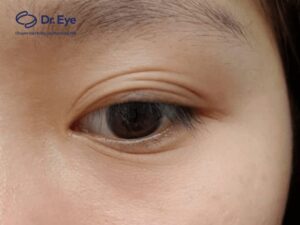
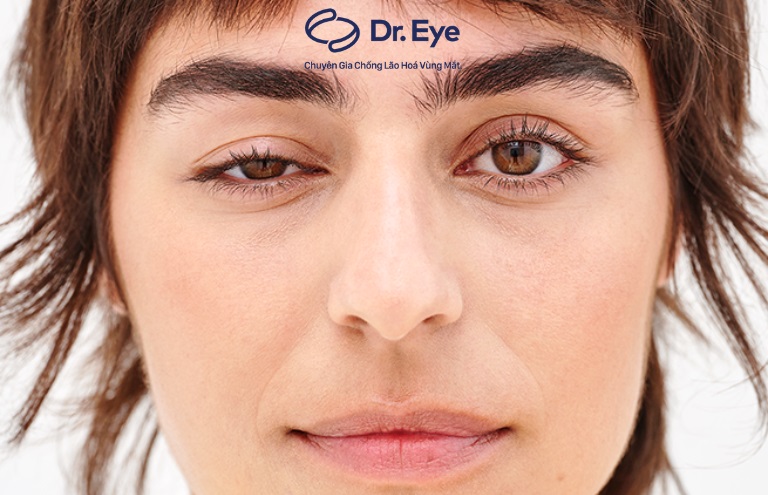
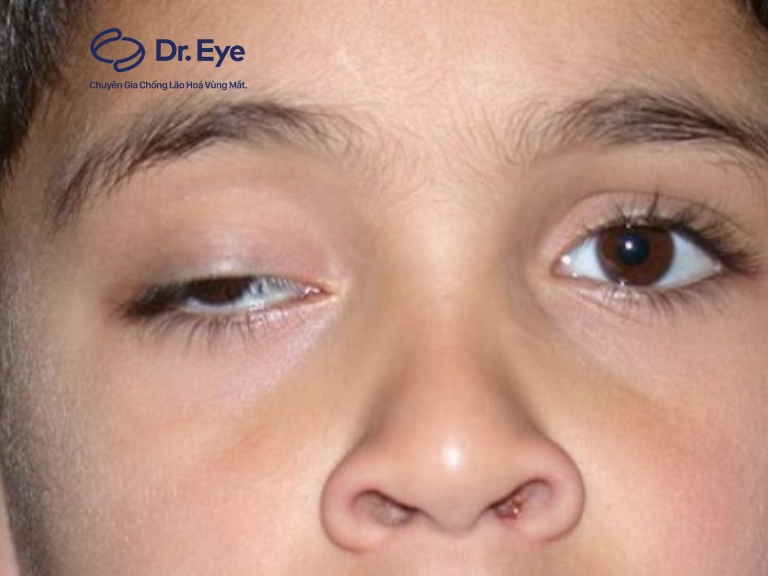
One-sided droopy eyelid refers to the situation where the upper eyelid droops down, lowering it compared to the other eyelid, causing an imbalance between the two eyes. When experiencing this condition, the droopy eyelid will cover part of the eye, leading to extreme dryness or tearing, and the eye cannot open fully, appearing dull and fatigued.
According to the Mustardé scale for measuring ptosis, one-sided droopy eyelid is classified into 3 levels:
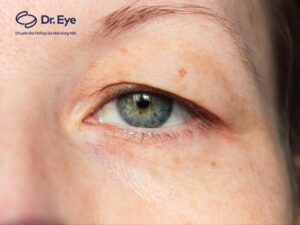
- Light ptosis: The upper eyelid droops but remains above the pupil, covering less than 50% of the pupil. Vision is generally not significantly affected, and the eye’s responsiveness may be slightly reduced (about 30%).
- Severe ptosis: The upper eyelid droops significantly, covering about 50–60% of the pupil. Vision is noticeably impaired, and the individual often has to raise their eyebrows or tilt their head to see clearly.
- Severe ptosis:The upper eyelid droops, nearly covering the entire pupil, significantly obstructing vision. Vision is greatly reduced, making it difficult for the eyes to perform normal eyelid lifting movements.
2. Causes of One-Sided Ptosis
In fact, there are many factors that can lead to one-sided ptosis, including congenital issues, aging, trauma, lifestyle habits, nerve damage, or other medical conditions. Specifically as follows:
2.1. Skin Aging
As we age, the skin becomes more prone to aging, wrinkling, and sagging. At this point, the skin around the eyes loses its natural elasticity and droops, leading to ptosis. Particularly, one-sided ptosis is more likely to occur in older individuals with dry skin and those who are overweight.
2.2. Unhealthy Eating and Lifestyle Habits
Not getting enough sleep or staying up too late, prolonged stress, having a habit of rubbing the eyes, and excessive use of electronic devices can lead to one-sided ptosis upon waking. Additionally, consuming too much salty food can cause water retention, leading to swollen eyelids and ptosis.
2.3. Congenital One-Sided Ptosis
Some individuals congenital ptosis due to abnormalities in the formation of the eyelid elevator muscle, causing drooping of one eyelid and resulting in asymmetry in the eyes. According to the Central Pediatric Hospital, congenital ptosis accounts for a significant percentage of cases of ptosis, approximately 50-70%.
2.4. Eyelid Revision Surgery
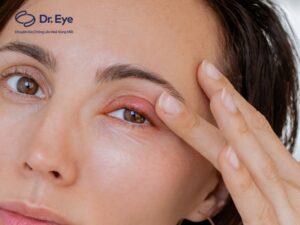
Another cause of drooping in one eyelid is complications from cosmetic surgery, specifically eyelid revision surgery. When performed at an unlicensed facility, by inexperienced doctors, or with improper techniques, excessive removal of excess fat or skin from the eyes can lead to ptosis.
2.5. Trauma
Injuries or accidents in the head area, particularly near the eyes, can damage the eyelid region, leading to drooping in one eyelid. In more severe cases, this may cause ptosis in both eyes.
2.6. Nerve Damage
Drooping of one eyelid may be related to nerve damage. If there is negative impact on the nerves, the individual may experience difficulty controlling eye movements, resulting in ptosis, strabismus, or pupil dilation.
2.7. Medical Conditions
Additionally, another cause of ptosis in one eyelid can be related to medical conditions such as myasthenia gravis, stroke, brain tumors, cavernous sinus syndrome, or apical syndrome.Eyes,…
3. What to do if one eye is droopy?
If you are experiencing droopiness in one eye, what should you do? For mild droopiness, the first step is to allow your eyes to rest and relax. Fatigue can worsen the droopiness. Additionally, you may use eye drops, perform eye exercises, massage your eyes, apply warm compresses, and ensure proper nutrition to support eye health.
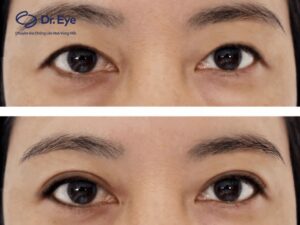
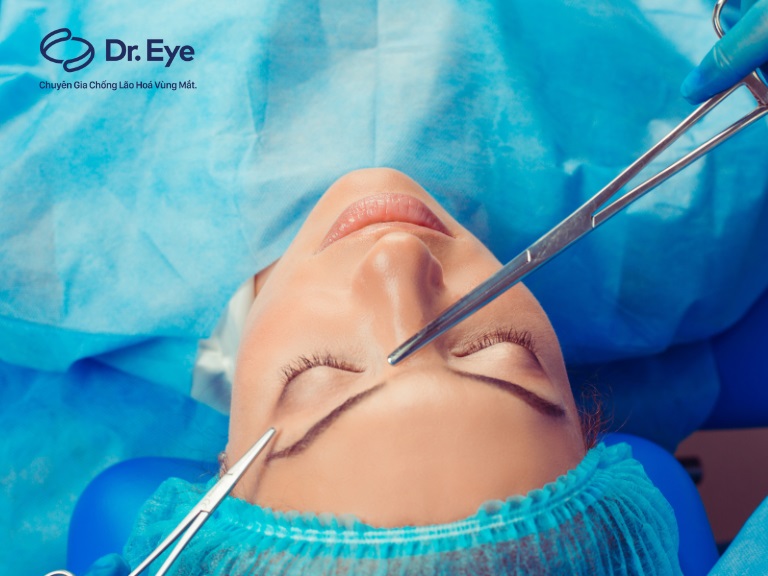
In cases of severe droopiness accompanied by signs of aging such as sagging skin and excess fat, you should consider cosmetic procedures like upper blepharoplasty or brow lift. These techniques can help remove excess skin, elevate the eyelid, and create a more defined eyelid crease.
For serious droopiness, you may require surgery to lift or lower the eyelid muscle. Through surgery, the doctor will adjust the eyelid area to create a higher eyelid.
Below are some suggestions for addressing droopiness in one eye:
3.1. Allow your eyes to rest and relax
If your eyes are overworked, it can lead to fatigue and droopiness. Therefore, it is essential to give your eyes as much rest and relaxation as possible.
You should establish a balanced lifestyle, such as going to bed on time and getting enough sleep; avoiding reading in low light conditions, and limiting prolonged exposure to electronic devices,…Rested eyes will experience less fatigue, stronger eye muscles, and improved droopy eyelids.
3.2. Use Eye Drops
In cases of droopy eyelids caused by issues such as pain, inflammation, itching, or eye strain, eye drops may be used. Eye drops help soothe eye strain, reduce fatigue, and alleviate droopy eyelids. However, the improvement in droopiness when using eye drops is quite slow. You should avoid overusing eye drops as they may cause irritation and discomfort.
For moderate to severe cases of droopy eyelids, eye drops are not effective for treatment.
3.3. Perform Exercises for One Droopy Eyelid
To address the issue of one droopy eyelid, you can try applying exercises for the eyes. These exercises help support blood circulation, reduce sagging skin, and contribute to preventing droopy eyelids.
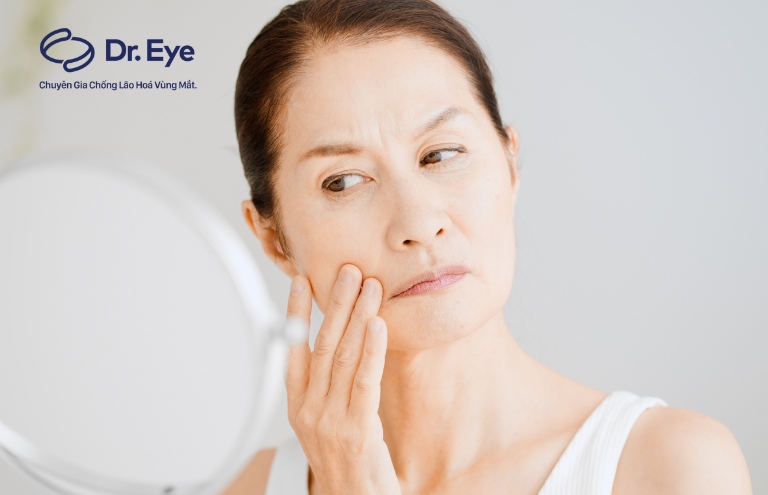
Simple home remedies for droopy eyelids with some easy exercises such as:
- Facial Muscle Exercises: First, close your eyes and raise your eyebrows, then slowly lower them. While performing the eyebrow raise and lower motion, keep your eyes closed and relax your facial muscles completely. Do this 10 – 15 times daily to help improve the condition of a droopy eyelid on one side.
- Eye Exercises: Perform the eyebrow raise as mentioned above, but this time combine it with blinking 7 times, then tightly close your eyes for 5 seconds. This exercise will help improve the condition of ptosis, making the eye muscles stronger; you should do this 10 times daily.
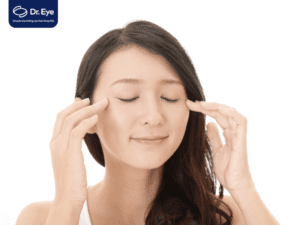
- Eyelid Lifting Exercise: First, use your thumb and index finger to press and massage the area around the eye socket. Then move down under the eyes and around the eye area. Perform this 5 times daily to help improve the condition of ptosis.
- Temporalis Pressure Point Massage: Use your fingers to massage the forehead and the sides of the temporalis area, then move down to the cheekbones, helping to strengthen the eye and facial muscles.
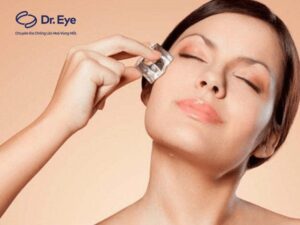
3.4. Eye Compresses to Help Reduce One-Sided Ptosis
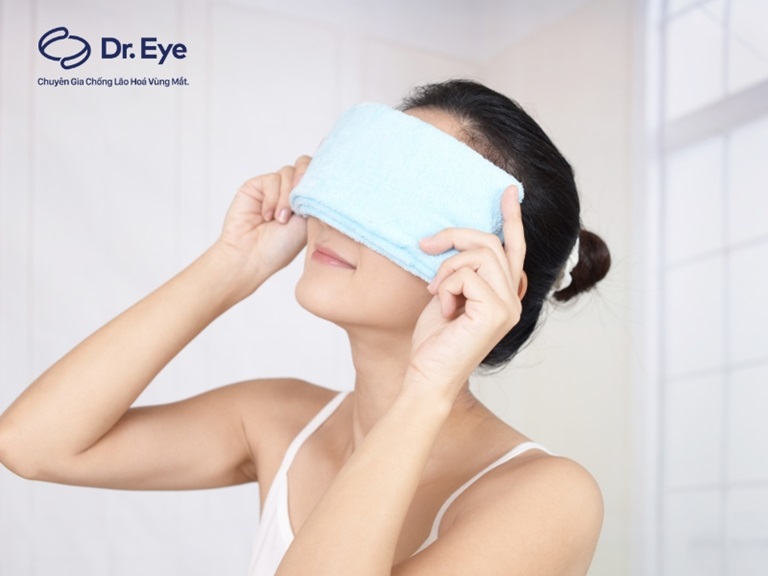
To improve the condition of one-sided droopy eyelids, you can apply eye compresses. Cold compresses with ice will help the muscles around the eyes contract, reducing swelling. Additionally, you can use warm compresses to help dilate the blood vessels around the eyes, improving blood circulation andreduce swelling.
3.5. Incorporating Eye-Healthy Foods
In addition to a scientific lifestyle, a nutritious diet that supports eye health is also an effective way to improve a droopy eyelid on one side. Foods you should include are seafood rich in Vitamin B12, vegetables like carrots, sweet potatoes, tomatoes, papaya, bell peppers, and spinach,… which contain beta-carotene and lutein that help enhance corneal health, protecting the cells in the eyes and body.
Additionally, include foods high in antioxidants such as strawberries, blueberries, grapes, and dark chocolate,… which help improve skin elasticity, combat aging, and reduce the occurrence of a droopy eyelid on one side.
3.6. Upper Eyelid Surgery for One-Sided Ptosis
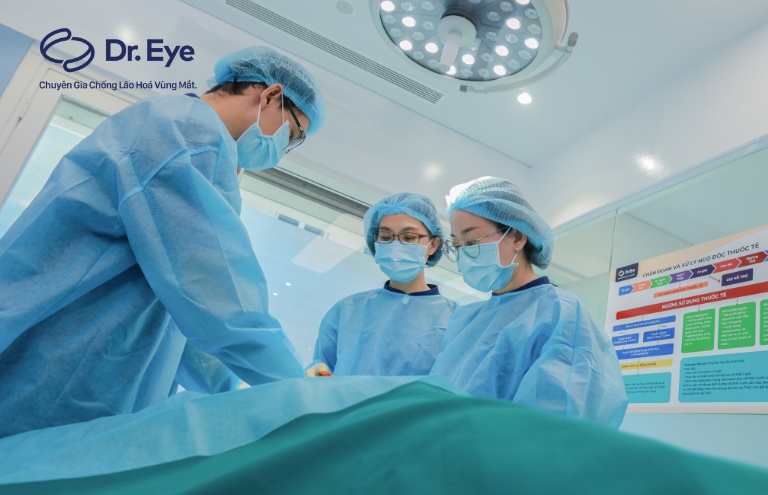
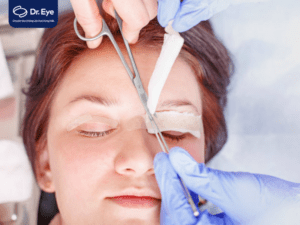
Upper eyelid surgery is a minor surgical procedure that removes excess sagging skin and shapes the eyelid crease symmetrically. This method is suitable for clients with droopy eyelids due to excess fat and sagging skin on the upper eyelid. It helps create a clear, even eyelid crease, making the eyes appear larger and more attractive, resulting in a more harmonious facial appearance. This method is applied in cases of mild ptosis.
3.7. Brow Lift
Brow Lift is a procedure that removes excess skin beneath the brow to address eyelid ptosis. This method is suitable for cases with minimal excess skin and fat on the eyelids, and mild to moderate ptosis.
A brow lift elevates the brow, removes sagging skin on the eyelids, alleviating ptosis and allowing for a wider eye appearance.

3.8. Eyelid Muscle Suspension or Lowering Surgery
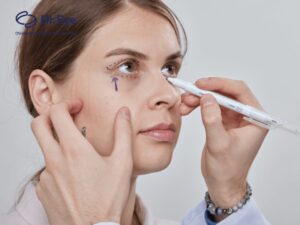
For cases of severe unilateral ptosis or when previous methods have not yielded the desired results, eyelid muscle suspension or lowering surgery may provide better outcomes. Currently, there are several surgical methods for ptosis correction:
- Lowering the Eyelid Muscle: This surgical method enhances the function of the upper eyelid muscle, suitable for mild to moderate ptosis cases with good muscle condition.
- Using Frontal Muscle Contraction to Indirectly Elevate the Eyelid via Suspension: This method involves pulling part of the eyelid muscle up to the frontal muscle, achieving symmetry in the eyelids using autologous materials like thigh strips or synthetic materials like silicone, sutures.not resolved. Suitable for cases of severe ptosis, where the function of the upper eyelid muscle is weak or absent.
- Direct eyelid suspension to the frontal muscle: In this method, the doctor uses a flap of the frontal muscle (which may be a C-shaped flap or a flap of the circular muscle of the eyelid) to directly suspend the eyelid, removing the excess skin on the eyelid, and addressing moderate to severe ptosis when the function of the upper eyelid muscle is weak or absent.
4. Can ptosis resolve on its own? Are there any implications?
Unilateral ptosis may resolve on its own if the cause is related to an unhealthy diet and sleep patterns. For other causes, ptosis cannot resolve without intervention from cosmetic methods, especially in cases of severe ptosis that obstruct vision.
Mild ptosis only affects aesthetics. However, severe ptosis can significantly impact daily activities and health, such as reducing the ability to observe, decreasing vision, and causing eye fatigue when trying to see things more clearly.
5. Unilateral ptosis: When should you see a doctor?
You should see a doctor as soon as possible for examination and treatment if the ptosis occurs suddenly or is accompanied by other symptoms.such as eye pain, blurred vision, or double vision. Additionally, if ptosis affects your appearance, you should consult a doctor for optimal solutions.

6. Reputable Clinic for Ptosis Treatment
The treatment methods mentioned above are highly effective in improving ptosis and have a low recurrence rate. However, surgical treatment for ptosis requires the doctor to have extensive practical experience, high expertise, and technical skills to ensure safety and minimize complications.
For interventions involving the eyelids such as upper blepharoplasty, brow lift, surgery, etc., you should choose a reputable clinic to achieve the desired results and minimize unnecessary risks.
If you are still unsure about which aesthetic clinic to choose, you can consider Dr. Eye. This is the first center specializing in comprehensive anti-aging treatments for the eye area specifically for middle-aged women. Dr. Eye takes pride in successfully treating cases of eye aging, including ptosis treatment.
The experienced doctors with full practice certificates at Dr. Eye are committed to providing thorough consultations.The method for effectively and safely treating ptosis is personalized according to each individual’s eye condition. The doctor designs a new eyelid shape for clients to visualize the results and makes adjustments until they are satisfied before proceeding with the procedure.
Dr. Eye is committed to a treatment process that meets medical standards, ensuring sterile conditions. The doctor performs the technique accurately and swiftly, minimizing the risk of unsightly scars, and the recovery time is quick, allowing clients to feel completely at ease.
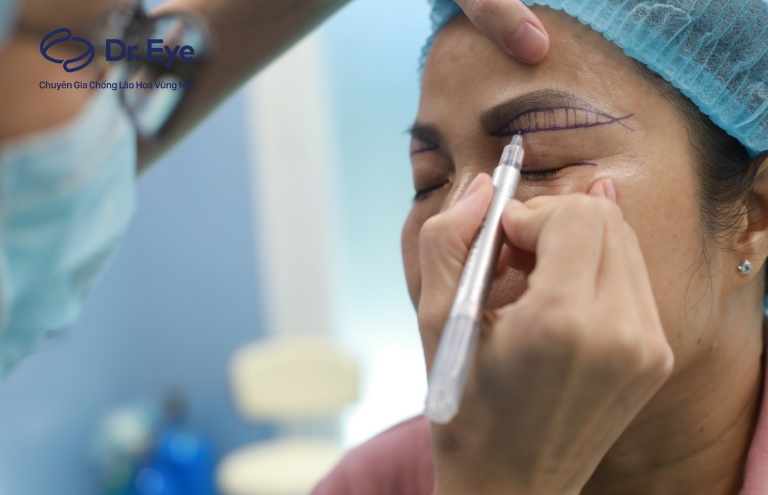
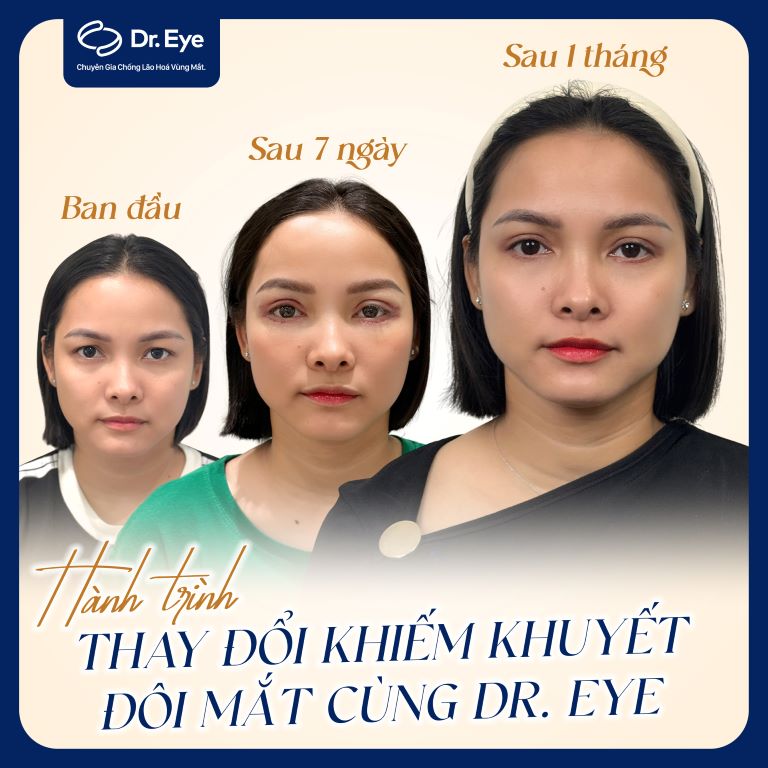
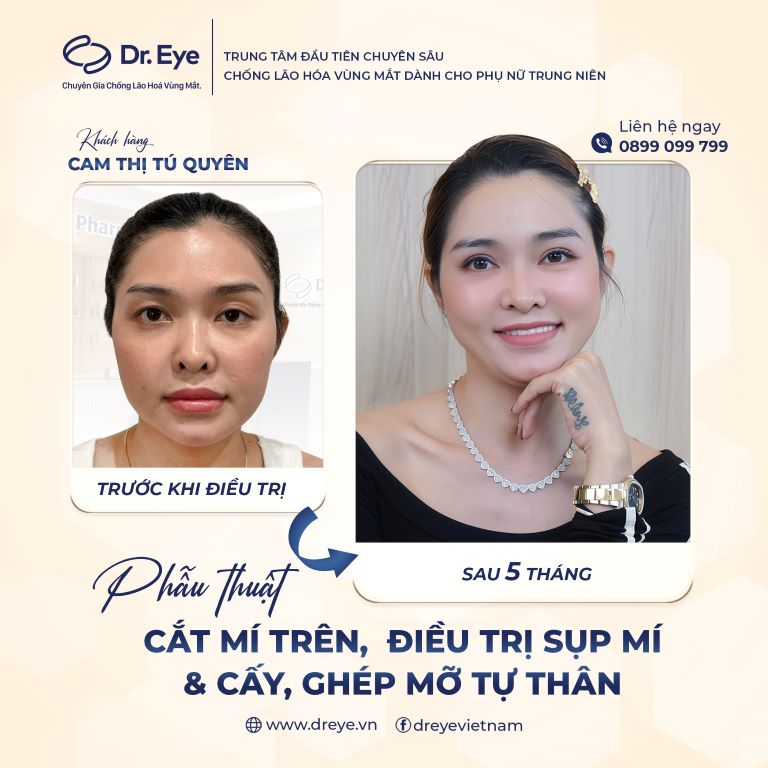
7. Client Testimonials Before and After Treating Ptosis
The results after treating ptosis at Dr. Eye are highly rated by many clients as natural and harmonious with their facial features, helping to create a more youthful and radiant appearance.
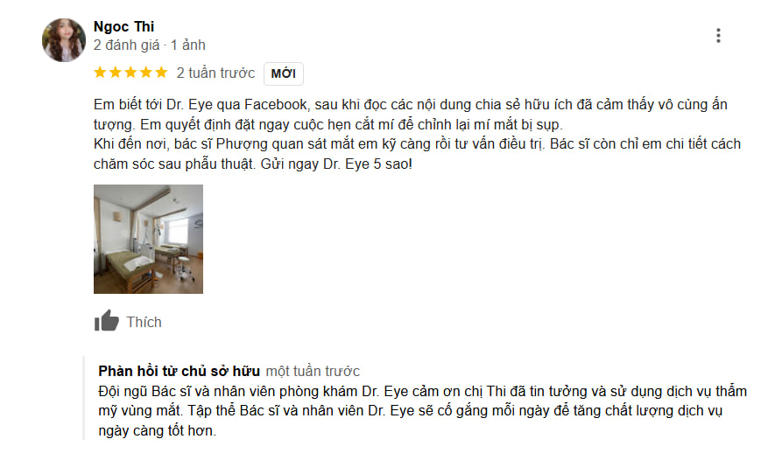
Clients are not hesitant to rate the quality of services at Dr. Eye with 5 stars:
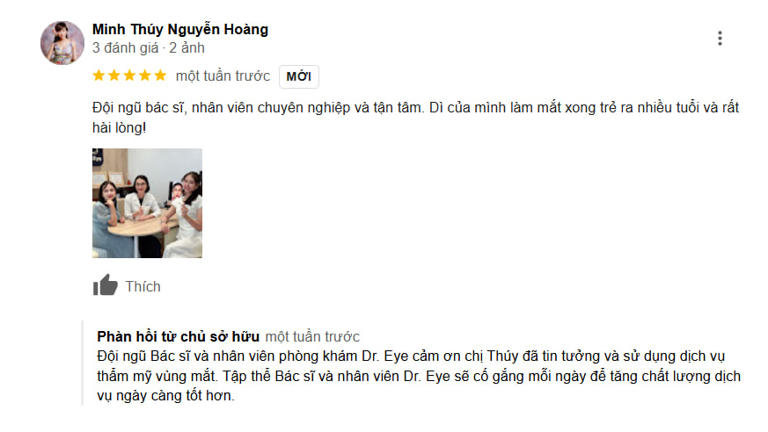
Contact us now with Dr. Eye for a consultation on suitable treatment options to soon say goodbye to your droopy eyelid on one side.
Request a callback for consultation
Through this article, Dr. Eye has helped you find the answer to the question what to do about a droopy eyelid on one side. If you want to address the issue of a droopy eyelid on one side, please visit reputable cosmetic clinics with skilled doctors who can assess your ptosis condition and provide appropriate, safe treatment methods.
8. Related questions about one-sided eyelid ptosis
In addition to the question of what to do about a droopy eyelid on one side, many people also have concerns like:
8.1. What to do if one eyelid is droopy after waking up?
If you experience drooping of one eyelid after waking up, you can try applying a cold compress, gently massaging the eyes, or allowing your eyes to rest. If this condition occurs frequently or is accompanied by unusual signs, you should consult a doctor for timely examination and treatment.

8.2. How does the doctor diagnose drooping of one eyelid?
The doctor diagnoses drooping of one eyelid through a clinical examination to assess the degree of droop and evaluate the function of the eyelid lifting muscle. The doctor may also use a slit lamp examination or perform Tensilon tests (if necessary) to accurately determine the cause.
8.3. Is drooping of one eyelid dangerous?
Mild drooping of one eyelid is not very dangerous. However, if left untreated, drooping may lead to amblyopia, strabismus, or other vision problems. Additionally, drooping can affect appearance, reduce confidence, and may be an early sign of conditions such as myasthenia gravis.
References
- Cleveland Clinic, “Ptosis (Droopy Eyelid)” – 08/09/2023, https://my.clevelandclinic.org/health/diseases/14418-ptosis-droopy-eyelid (accessed 02/05/2024)
- Rachael Ajmera, “Ptosis: Droopy Eyelid Causes and Treatment” – 20/02/2023, https://www.healthline.com/health/eyelid-drooping (accessed 02/05/2024)
- National Library of Medicine. “Congenital Ptosis” – 03/04/2023, https://www.ncbi.nlm.nih.gov/books/NBK568688/ (accessed 08/08/2025)
Introduction Dr. Eye
Understanding the desire to preserve the youthful beauty of the eyes for middle-aged women, Dr. Eye offers modern solutions to address all aging issues around the eyes such as sagging eyelids, eye bags, crow’s feet,…


Related articles



 MAKE AN APPOINTMENT


