

Can congenital ptosis be treated? What are the costs involved?
The eyes are considered the “windows to the soul,” but unfortunately, ptosis not only detracts from the overall aesthetics of the face but also significantly impacts health and daily life. Discover the causes and treatment options for congenital ptosis in the following article.
1. What is Congenital Ptosis?
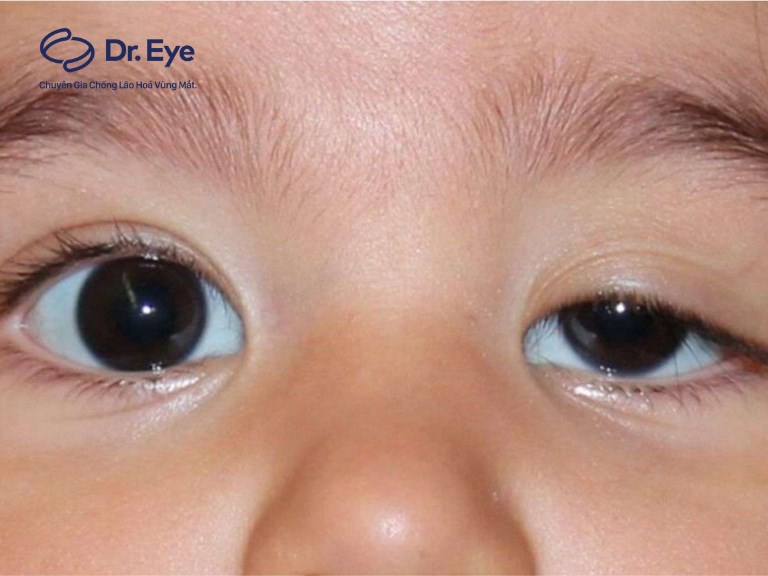
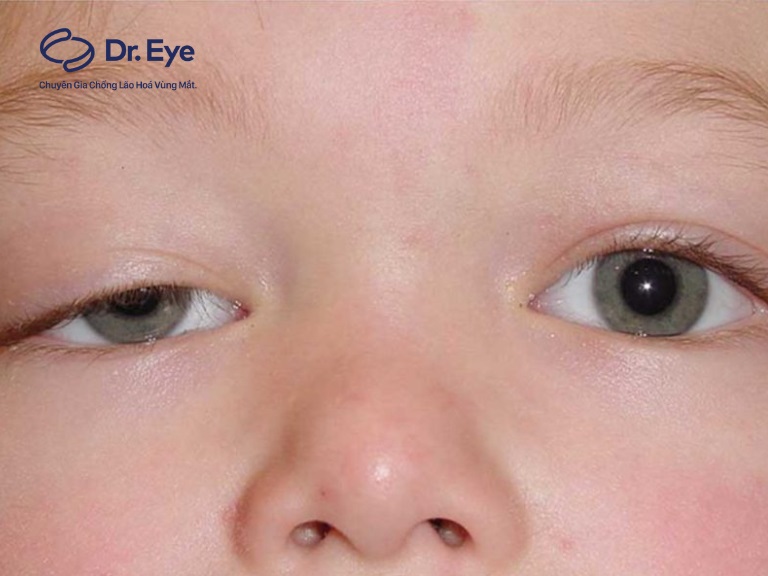
Congenital ptosis is a condition where the eyelid droops from birth, which can affect one or both eyelids due to genetic factors or abnormalities in the development of the eyelid muscles.
The condition of ptosis can occur at birth or may develop later in adulthood. Congenital ptosis accounts for approximately 55 – 75% of all ptosis cases.
2. Accurate Signs of Congenital Ptosis
To assess the severity of ptosis, you can refer to the degree of drooping. Below are three basic levels for your reference:
- Light Level: This is the condition where the eyelid droops slightly, the edgeThe upper eyelid covers part of the pupil’s edge (about 2 mm or less)..Congenital ptosis due to mechanical factors means being compressed by tumors in the eye socket or surrounding areas such as dermoid cysts, vascular tumors, or neurofibromas, or it may also be due to craniofacial deformities,…
In cases of congenital ptosis, there are often symptoms such as droopy eyelids with reduced eyelid movement, accompanied by symptoms of the underlying condition causing the ptosis.
3.3. Congenital Ptosis Due to Muscle Condition
Another cause of congenital ptosis is due to muscle condition. This muscle condition occurs as a result of obstetric trauma, leading to congenital droopy eyelids. When ptosis is due to muscle condition, symptoms may include slight reduction in eyelid movement, with the upper eyelid crease being elevated or indistinct.
3.4. Congenital Droopy Eyelids Due to Nerve Issues
In addition to the above causes, congenital droopy eyelids may also result from abnormal nerve development and distribution during the embryonic stage. For example, congenital oculomotor nerve palsy (partially or completely), monocular elevation deficiency, double elevator palsy, and congenital myasthenia gravis.
Moreover, congenital ptosis may also be associated with aberrant movements such as the Marcus-Gunn phenomenon, where the eyelids can open or blink in response to jaw movement during feeding, accompanied by amblyopia, refractive errors, and strabismus. Additionally, ptosis may pose a risk for congenital Horner’s syndrome, which is characterized by droopy eyelids.mild, pupil constriction, reduced iris pigmentation, eye globe retraction,…. however, this condition is often rare.
3.5. Eyelid Constriction Syndrome
Congenital ptosis due to eyelid constriction syndrome is a complex congenital defect with a hereditary nature. This syndrome presents with signs including ptosis, shortened palpebral fissure, inverted fan folds, a low nasal bridge, and a noticeable distance between the eyes.
4. Does Congenital Ptosis Have Any Effects?
Mild ptosis is less likely to cause vision problems, primarily affecting the overall aesthetics of the face. However, severe ptosis can significantly impact health, leading to serious conditions such as amblyopia, astigmatism, and other refractive errors, as well as strabismus and spinal curvature due to the need to tilt the head to see better.
Therefore, if not detected and treated early, the condition of ptosis can create difficulties in learning, working, and daily activities, greatly affecting quality of life.

Congenital ptosis has caused many women to feel shy in social interactions and lose confidence in life. 5. Can Congenital Ptosis Be Treated?
Today, with advancements in science, the field ofIn modern practice, congenital ptosis can be treated using the following three methods:
5.1 Shortening the Levator Muscle Surgery
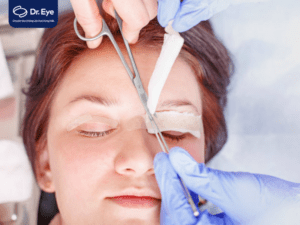
This technique is applied in cases of eyelid ptosis where the levator muscle function is still relatively good. The doctor will make a small incision in the upper eyelid, remove excess skin, and stitch it back to allow the eyelid crease to recover naturally. This helps minimize scarring, swelling, and bleeding for the patient.
However, this technique does not provide long-lasting results and may easily recur as the levator muscle can gradually age over time, leading to a loss of eyelid support function.
5.2 Direct Eyelid Suspension Surgery to the Frontal Muscle
In cases where the levator muscle is weak and no longer has enough strength to support the eyelid, the doctor uses a flap of the frontal muscle, such as a three-part frontal flap or a progressive flap, to lift the eyelid without covering the cornea. Additionally, the doctor may remove any excess eyelid skin (if present) to enhance the definition of the eyelid crease. This method is an ideal choice for treating severe ptosis due to congenital factors or trauma.
However, this technique requires a highly skilled doctor with a deep understanding of the structure and function of the eyelids to ensure accurate eyelid suspension without affecting the cornea.
5.3 Indirect Eyelid Lifting Surgery Using Frontal Muscle Contraction Through Suspension Threads
This method involves pulling a portion of the eyelid muscle up to the frontal muscle using autologous materials such as thigh fascia or superficial temporal fascia.or artificial materials such as silicone, non-absorbable threads,… This method is suitable for treating ptosis due to weak or absent upper eyelid muscle function, but it may easily recur.
Despite its many benefits, this eyelid lifting technique carries risks such as eyelid retraction, corneal inflammation, and misalignment of the eyelid from the eyeball,… if the doctor performs it incorrectly or uses low-quality lifting materials,…
Depending on the degree of ptosis, the doctor will recommend an appropriate method. You should visit reputable clinics for a thorough examination and detailed consultation.
Dr. Eye – Specialized treatment for congenital ptosis, safe and effective for lasting results
Dr. Eye is proud to be the first center specializing in comprehensive anti-aging treatments for the eye area dedicated to middle-aged women, licensed by the Department of Health since March 2024. With its expertise and capabilities, Dr. Eye offers effective and safe beauty solutions, helping women improve congenital ptosis and achieve their dream of youthful eyes.
So, what does Dr. Eye offer to help women feel more confident in themselves? Here are some impressive advantages of the center that you cannot miss:
- Here, we have a team of experienced doctors with all the necessary certifications and specialized training in eyelid surgery. At the same time, the doctors continuously update their knowledge and the latest aesthetic techniques, along with practical experience. Therefore, clients receive careful examinations and accurate consultations on the appropriate treatment for ptosis.sagging.
- The costs are clearly and transparently disclosed, with consultations provided before treatment to help clients manage their finances. Additionally, Dr. Eye offers a variety of payment methods for clients to choose from, such as credit card payments, bank transfers, and more.
In addition to these advantages, clients have the opportunity to enjoy 5-star aesthetic services with many special benefits regarding infrastructure, equipment, and more. Specifically:
- Clients can easily schedule their surgery according to their personal timetable (as long as it is at least 24 hours in advance) and receive free health checks and pre-operative tests.
- Clients will undergo ptosis correction in a sterile, hygienic surgical room. Afterward, you will rest in a private, comfortable recovery room and receive a specialized eye compress, a home care kit, and in-depth eye skincare services during your complimentary follow-up visit.
- Rest assured that there will always be attentive staff available to answer any questions you may have, 24/7.
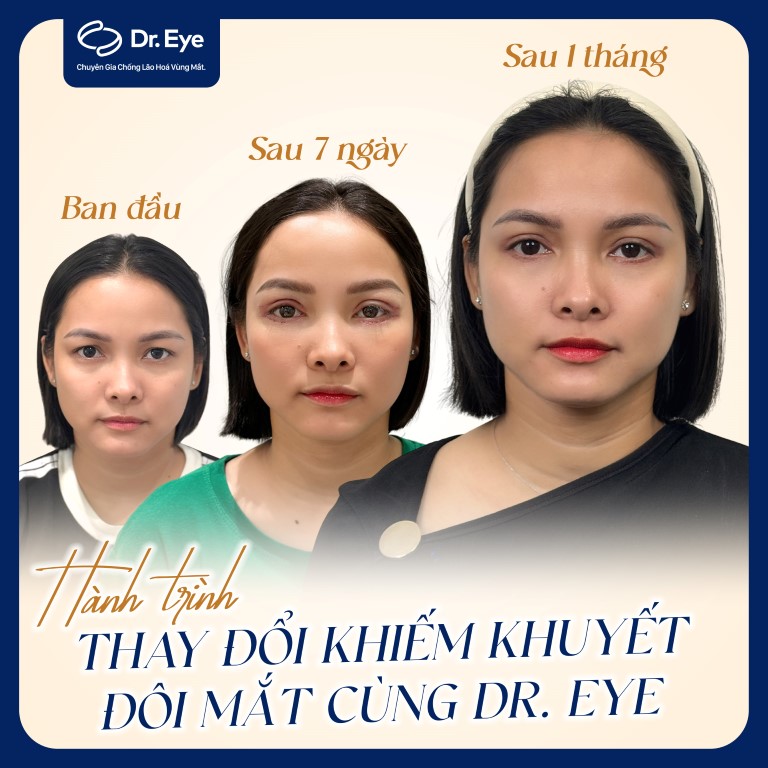
It is precisely because of all these outstanding features thatAt Dr. Eye, the specialized clinic for ptosis treatment has helped many clients overcome concerns about droopy eyelids, which can affect youthful appearance and limit vision. A notable case is that of Ms. Thuy Giang, who had congenital ptosis inherited from her mother, along with sagging skin due to aging. After 7 days of following the upper blepharoplasty plan – lower blepharoplasty recommended by Dr. Eye, her new eyelid crease gradually became more defined, and the skin around her eyes appeared smoother. Now, over 6 months later, she feels much more confident with her eyelids looking even and beautiful, enhancing her impressive feminine charm.

A noticeable change in Ms. Giang’s eyes after 1 month post-surgery. Schedule an appointment now with Dr. Eye for an examination and consultation regarding congenital ptosis, and say goodbye to asymmetrical eyelids that affect your aesthetics.
6. Cost of congenital ptosis surgery
The cost of surgery for congenital ptosis typically ranges from 8,000,000 to 20,000,000 VND, depending on various factors such asMethod of implementation, degree of ptosis, aesthetic facility, performing doctor,…
At Dr. Eye, the cost of surgery for congenital ptosis is 7,000,000 – 12,000,000 VND, helping to make the eyelid crease more defined, not limiting the field of vision, preventing strabismus,… restoring youthful and attractive eyes for you.
See more: Price list for ptosis treatment
7. Frequently Asked Questions
Below are answers to some other questions related to congenital ptosis:
7.1. Does ptosis resolve on its own?
If congenital ptosis, pathological conditions, or aging are present, you must undergo medical intervention to effectively address it. However, if the ptosis is due to lack of sleep, being overweight,… it may resolve on its own after some time if you maintain a healthy diet and proper rest.
7.2. Is congenital ptosis dangerous?
With mild ptosis, most cases only affect aesthetics and do not negatively impact the patient’s health. However, when the condition progresses to moderate or severe levels, the patient’s vision may be significantly impaired, making it difficult to carry out daily activities comfortably.
More dangerously, ptosis can be a warning sign of certain medical conditions such as myasthenia…muscle, paralysis of the third cranial nerve,… Therefore, when noticing unusual signs in the eyelid muscles, you should see a doctor for an examination and to find an appropriate treatment plan.
7.3. When is the ideal time to treat congenital ptosis?
If ptosis has not led to amblyopia, ages 4 to 5 are the best times for treatment. At this age, the eyelid muscles still have the ability to support the eyelids, so the doctor does not spend much time addressing the issue. Additionally, the body recovers faster, and the risk of complications is lower.
In general, congenital ptosis can still be corrected if the right method is chosen. To safely treat congenital eyelid ptosis and achieve long-lasting results, clients should choose a reputable facility with highly specialized doctors.


References
- Cleveland Clinic. 14 08 2023. Ptosis (Droopy Eyelid). https://my.clevelandclinic.org/health/diseases/14418-ptosis-droopy-eyelid (accessed 02/05/2024)
Introduction Dr. Eye
Understanding the desire to preserve the youthful beauty of the eyes for middle-aged women, Dr. Eye offers modern solutions to address all aging issues around the eyes such as sagging eyelids, eye bags, crow’s feet,…


Related articles



 BOOK AN APPOINTMENT


