

What is medial epicanthoplasty and should you consider it? Here are 9 things you need to know.
Among the various aesthetic eye procedures today, medial epicanthoplasty is gaining significant attention from many women. This is a solution to enhance narrow eyes, helping women achieve larger and more attractive eyes. So, what is medial epicanthoplasty and should it be performed?
1. What is Medial Epicanthoplasty?
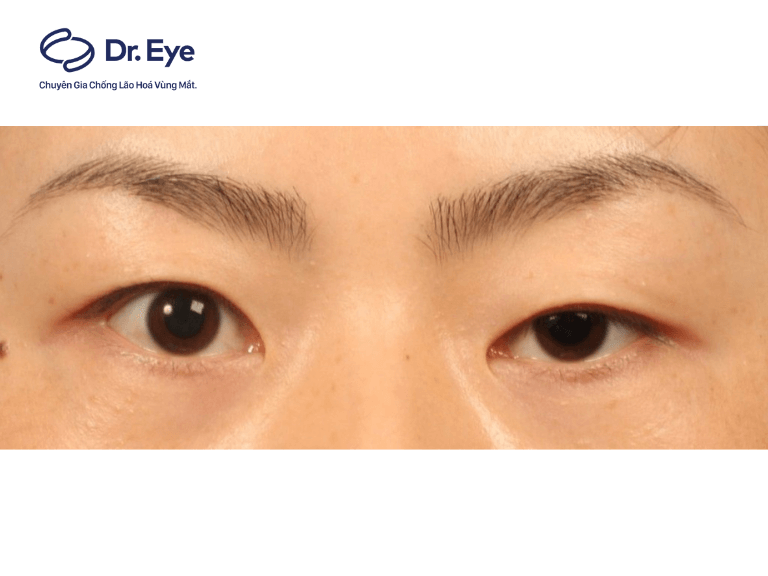
The inner corner of the eye, also known as the medial canthus, is located near the bridge of the nose and has a horizontal stretch of skin, while the outer corner is the tail of the eye.
What is medial epicanthoplasty? This technique involves removing excess skin from both sides of the inner corner of the eye, aiming to change the horizontal length of the eye and address its vertical appearance. This method will help the eyes appear larger, brighter, and more balanced, creating a youthful and attractive look. At the same time, it addresses shape concerns, such as narrow or uneven eyes.

2. Methods of Medial Epicanthoplasty
Currently, there are two methods of medial epicanthoplasty: outer corner and inner corner. Each method has its own advantages and disadvantages and is suitable for different conditions, specifically:
2.1.Outer Corner Eye Surgery
Outer corner eye surgery is a technique that removes excess skin at the outer corners of the eyes, altering the length of the eyelid to address the issue of eyes that are too close together, resulting in larger, more balanced, and deeper-looking eyes.
During the procedure, the doctor makes an incision at the outer corner of the eye, skillfully removing a portion of excess skin to create a wider eye corner. The surgery is typically performed under local anesthesia to ensure the patient feels more comfortable throughout the process.
Advantages:
- Helps to elongate and widen the outer corners of droopy or short eyes.
- Addresses protruding eyes, droopy eyes, and lower eyelids that are turned under or retracted.
- Rarely leaves scars, with a short recovery time.
Disadvantages:
- Must be performed by a skilled and experienced doctor to minimize the risk of scarring and complications.
2.2. Medial Epicanthoplasty
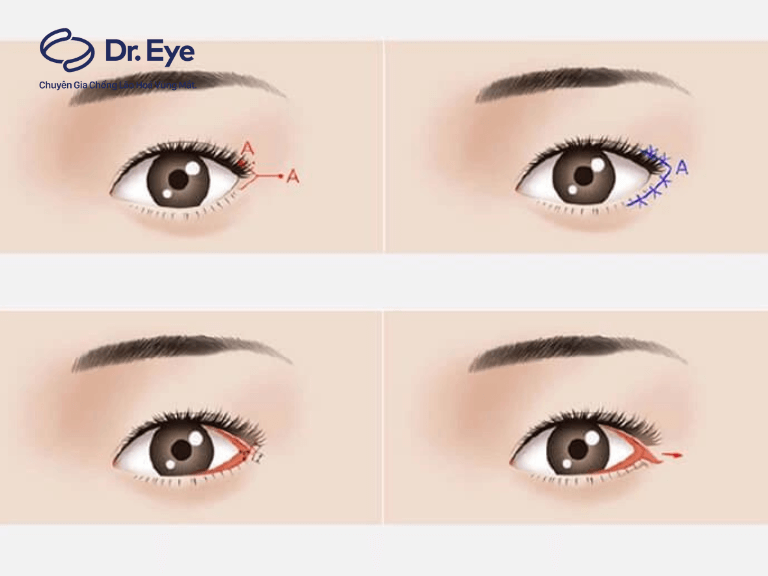
Medial epicanthoplasty is a technique that involves making an incision at the inner corner of the eye to reshape the eyes, adjusting their size and shape to create a more sparkling, round appearance with added emphasis.
During the procedure, the doctor will make a small incision at the inner corner of the eyelid to remove excess skin in the triangular area of the inner corner, along with any excess fat. The doctor will then reshape the eye, adjust the tear duct, and secure the position with cosmetic sutures to close the wound.
Advantages:
- Addresses the issue of short, fan-shaped eyes.
- Improves the asymmetry between the eyes.
- Can be combined with upper eyelid surgery to reduce the risk of eyelid inversion.
- Short recovery time.
Disadvantages:
- There is a risk of scarring if performed by a less experienced doctor, as the skin in the inner corner is tighter and thicker.
- The procedure is complex and challenging, requiring highly skilled and specialized doctors.
3. Benefits of Medial Epicanthoplasty
BelowHere are the benefits of medial epicanthoplasty that you should know:
- Enhance the aesthetics of the eyes: Medial epicanthoplasty will address the issue of small, less attractive eyes, increasing the openness for rounder and more sparkling eyes. At the same time, it improves the appearance of the eyes as well as the overall face.
- Effective and safe: Medial epicanthoplasty is a minor surgical procedure that does not alter or affect the structure of the eyes. This method only impacts the skin area, is non-invasive, making it quite safe and providing more attractive eyes.
- Quick procedure time: Typically, a medial epicanthoplasty procedure takes only 40 – 60 minutes, so the completion time is relatively quick, and there is no need for a long recovery period.
- Reasonable cost: Depending on the clinic, the cost of medial epicanthoplasty may vary, but the price is generally reasonable. Additionally, the results will be long-lasting after the procedure.


4. Should you consider medial epicanthoplasty?
Depending onThe condition of your eyes and your needs will determine whether or not to perform medial epicanthoplasty. Below are the cases where medial epicanthoplasty is recommended and not recommended:
– Cases where medial epicanthoplasty is recommended:
- Short and small eyes.
- Eyes that are too far apart, causing asymmetry.
- Presence of a fan-shaped fold at the inner corner of the eye.
- The outer corners of the eyes have many wrinkles obstructing vision.
- Protruding or slanted eyes.
- Asymmetry between the outer corners of the eyes.
- The distance from the outer corner of the eye to the outer edge of the eye socket is 4mm or more.
– Cases where medial epicanthoplasty is not recommended:
- Small eyeballs with severe eye sinking.
- Severe ptosis.
- The distance between the outer corner of the eye and the outer edge of the eye socket is too small.
5. The Procedure for Medial Epicanthoplasty
The doctor will examine the client’s eye condition and recommend an appropriate cosmetic method to achieve optimal and safe results.
Note: Before the day of the medial epicanthoplasty, you should not wear contact lenses or use any facial treatments such as peels or microneedling to avoid affecting the treatment results.
5.2. During the Medial Epicanthoplasty
When starting the medial epicanthoplasty, the doctor will administer anesthesia and proceed to widen the inner corner of the eye according to the chosen method. The surgical process may take from 40 to 60 minutes depending on the client’s eye condition.
5.3. After the Medial Epicanthoplasty
After the surgery, you may feel tightness in the inner corner of the eyes, swelling, and bruising. At this time, you should care for your eyes according to the doctor’s instructions. The suture removal may take place from 5 to 7 days depending on each client’s healing progress. Therefore, you should return for a follow-up as scheduled by the doctor.

6. Risks of Improper Medial Epicanthoplasty
Although it is a minor procedure, medial epicanthoplasty can lead to various complications if not performed correctly. Below are some common risks:
- Poor Scarring: IfIf the surgeon lacks high-level expertise, experience, intervenes too deeply, or sutures ineffectively, it can affect the eyelid area and may leave unsightly scars.
- Asymmetrical Inner Corners: If the surgeon miscalculates the proportion of the inner corner opening between the two eyes, it will result in asymmetrical inner corners, affecting the overall appearance of the eyes.
- Eyelid Eversion: During the surgery, if the surgeon does not skillfully remove excess skin or fat, taking too much fat from the eye area can lead to eyelid eversion.
- Conjunctival Damage, Affecting Vision: If the surgery is not performed correctly and safely, it poses a risk of prolonged eyelid inflammation for several days, and may even affect the eye structure and vision if not detected and addressed promptly.

7. Post-Inner Corner Eye Surgery Tips to Avoid Unsightly Scars and Infection
After undergoing inner corner eye surgery, to avoid unsightly scars or infection, you should keep the following in mind:
- Take medication as prescribed by your doctor to reduce swelling, inflammation, and bruising.
- Apply a cold compress during the first 24 hours to help reduce swelling and bruising.
- Do not rub your eyes, and limit touching the surgical area after the procedure to avoid injury or infection.
- Rest or sleep with your head elevated to minimize swelling and bruising.
- Avoid strenuous activities or heavy lifting, such as sports, as they may affect the healing process.
- Keep water, soap, or skincare products away from the wound until it is fully healed.
- Attend follow-up appointments as scheduled by your doctor to monitor healing progress and aesthetic results.
8. Safe Inner Corner Eye Surgery Tips for Naturally Round Eyes
Here are some safe inner corner eye surgery tips that can yield effective results from the first attempt that women should know:
8.1. Advice from Aesthetic Doctor Dr. Eye
Before deciding on inner corner eye surgery, women should research and consider choosing a reputable aesthetic clinic with qualified doctors.highly qualified, fully licensed, and experienced in performing procedures. Poor-quality clinics may not ensure that surgical processes meet standards, and doctors with inadequate skills can lead to unpredictable consequences.
Dr. Eye Aesthetic Clinic – the first center specializing in comprehensive and in-depth treatment for eye-area rejuvenation aimed at middle-aged women. The clinic is licensed by the Ho Chi Minh City Department of Health and is a reputable facility that has helped hundreds of clients enhance their small, narrow eyes for a more attractive appearance.
To provide youthful eyes through optimal, safe, and effective techniques, Dr. Eye has established five commitments to serve clients:

With eyelid surgery performed by highly skilled, specialized doctors with extensive experience, we confidently offer clients a clear eyelid crease, ensuring that the final result is beautifully rounded, naturally attractive, and harmonious eyes. At Dr. Eye, we offer two methods: full eyelid surgery and mini eyelid surgery. Based on the client’s eye corner condition, the doctor will discuss and select the most suitable method.
Performing eyelid surgeryAt Dr. Eye, clients can feel assured due to the outstanding advantages such as:

Additionally, the doctors at Dr. Eye are attentive and provide guidance on care to help reduce swelling and bruising, while also suggesting a nutritional plan to promote faster healing and maintain long-lasting results.
8.2. Client Testimonials from Those Who Have Undergone Inner Corner Eye Surgery at Dr. Eye
Ms. Vòng Xuân Hạnh (38 years old, Ho Chi Minh City) is one of the cases that underwent inner corner eye surgery using mini upper blepharoplasty at Dr. Eye, successfully enhancing the appearance of her eyes and overall facial attractiveness.
After two childbirths, her previously double eyelid eyes showed signs of ptosis, and the double eyelid crease had disappeared, leaving her with what appeared to be a monolid. She shared that every time she looked in the mirror, she felt that her small eyes made her face look much older than her age, and on several occasions, she was even called ‘auntie’ when going out, which made her very upset.
Thanks to a friend’s recommendation, she learned that Dr. Eye is a reputable clinic for eye aesthetics with a team of skilled doctors, and Ms. Hạnh decided to come here. After a thorough examination, the doctor proposed a treatment plan involving mini eyelid surgery to create a clear eyelid crease, open the inner corner of the eyes to make them appear larger, and combine it with a brow lift.under the brow to address the excess skin on the upper eyelid and droopy outer corners of the eyes.
The results show that choosing to trust the skills of Dr. Eye was a wise decision for Ms. Hanh. Her eyes now have a clear, round eyelid crease that looks natural, vibrant, and much more captivating.
Ms. Hanh further shared, “The equipment here is very good, and the medical staff is also very dedicated, which makes me feel at ease. While lying on the surgical chair, I felt reassured by the equipment and the attentive doctors, so I didn’t feel scared.”.

Don’t let the imperfections around your eyes diminish your confidence. Contact Dr. Eye for a consultation with the doctor to find the right solution to regain youthful, radiant, and happier eyes!
Request a callback for consultation
9. Frequently Asked Questions
Below are some inquiries related to inner corner eye surgery.
9.1. ChiHow much does inner corner eye surgery cost?
The cost of inner corner eye surgery ranges from approximately 8 to 10 million VND, depending on the aesthetic facility, the surgeon, the technique used, and the client’s eye corner condition. At Dr. Eye, the price for the inner corner eye surgery service is 8,000,000 – 12,000,000 VND.Cost of ptosis correction at Dr. Eye is 8,000,000 – 12,000,000 VND.
9.2. Is inner corner eye surgery painful?
Before the inner corner eye surgery, clients receive local anesthesia, so they will not feel pain during the procedure. Once the anesthesia wears off, you may experience some discomfort or soreness in the first few days. This is normal and can be managed with pain relief medication prescribed by the doctor.
9.3. Will the results of inner corner eye surgery last forever?
Inner corner eye surgery typically provides permanent results. In rare cases, natural aging may cause changes in the skin and tissue around the eyes, which may require a repeat of the procedure to maintain optimal results.
Inner corner eye surgery is an aesthetic procedure that helps enhance small, narrow eyes that lack appeal. Whether to undergo this procedure depends on the condition of the eye corners and the needs of the clients. If considering inner corner eye surgery, it is important to choose reputable beauty facilities, licensed doctors, and experienced professionals.advanced techniques are implemented to achieve optimal results while ensuring safety.
References
- Canthoplasty. https://my.clevelandclinic.org/health/treatments/24828-canthoplasty (accessed 07/23/2024)
- Poonam Sachdev. What Is Canthoplasty?. 08/24/2022. https://www.webmd.com/eye-health/what-is-canthoplasty (accessed 07/23/2024)
- Expanding the inner corner of the eye and what you need to know. https://www.vinmec.com/vie/bai-viet/mo-rong-goc-mat-va-nhung-dieu-can-biet-vi (accessed 07/23/2024)
Introduction Dr. Eye
Understanding the desire to preserve the youthful beauty of the eyes for middle-aged women, Dr. Eye offers modern solutions to address all aging issues around the eyes such as sagging eyelids, eye bags, crow’s feet,…


Related articles







 BOOK AN APPOINTMENT


