

What to do about hypertrophic scars after upper eyelid surgery and how to effectively prevent them?
A small number of clients may develop keloid scars after upper eyelid surgery, significantly affecting the aesthetics of their eyes and overall facial appearance. So, what should be done if keloid scars occur after upper eyelid surgery for quick recovery? Let’s explore this in detail with Dr. Eye in the following article!
1. Identifying Keloid Scars on the Eyelids
Keloid scars are a condition where the skin in the affected area protrudes above the skin surface, larger than the original wound. This type of scar typically forms when there is excessive collagen production during the healing process, causing pain and itching. If it persists on the skin for a long time without timely intervention, it can greatly affect facial aesthetics, leading to a loss of confidence and, in severe cases, covering the entire eye and limiting vision.

2. Causes of Keloid Scars After Upper Eyelid Surgery
If the doctor is skilled, performs the procedure carefully, and the client follows post-operative care instructions properly, upper eyelid surgery should not leave scars, or the scars may blend into the eyelid crease, appearing very natural and difficult to detect with the naked eye.
However, there are still a few cases where keloid scars appear after upper eyelid surgery, which may be due to:
2.1. Keloid-prone Skin Type
If you have a skin type that is prone to keloids, you will have a higher risk of developing keloid scars after upper eyelid surgery compared to others. Therefore, you should choose a reputable clinic.Trust a skilled specialist for a consultation on suitable aesthetic methods that minimize scarring and achieve desired results.
Can individuals with keloid-prone skin undergo eyelid surgery? Rest assured that individuals with keloid-prone skin can still undergo upper blepharoplasty, provided they choose a reputable clinic with experienced doctors and modern equipment. This helps ensure that the incision is fine, small, and heals quickly with minimal swelling, reducing the risk of scar formation. |
2.2. Doctor’s Expertise
If the doctor performing the upper blepharoplasty lacks knowledge of eyelid anatomy and is not sufficiently skilled in the procedure, they may inadvertently affect the inner eyelid skin. This can lead to prolonged healing, redness, and a higher likelihood of unsightly scarring.
2.3. Improper Diet
Post-operative nutrition is one of the key factors influencing healing speed and scar formation rates. If you do not consume a balanced diet and intake foods or beverages that may cause irritation (such as fried foods, beer, alcohol, coffee, etc.), the incision on the eyelid may be at risk of developing keloids.

2.4. Infection after eyelid surgery due to improper care
In addition to diet, proper wound care after surgery is also very important. If you do not pay attention to careful hygiene or forget to take anti-swelling and anti-inflammatory medications as prescribed by your doctor, it may lead to hypertrophic scars.

3. What to do if you have hypertrophic scars after eyelid surgery?
In the unfortunate event that you encounter scarring after eyelid surgery, you may try some of the following methods to address the issue:
3.1. Use scar creams or topical treatments
After removing the eyelid sutures, you should use scar prevention or treatment creams as directed by your doctor to help reduce itching as the wound heals and to limit excessive collagen production (the main cause of hypertrophic scars). Typically, scar prevention/treatment products contain ingredients such as vitamin C (which helps with antibacterial properties and reduces swelling), onion extract (which has anti-inflammatory effects and softens the skin), vitamin E (which improves skin color), squalane (which provides hydration and has antioxidant properties)… most importantly, the ingredient silicone helps inhibit scar tissue formation.
When using scar creams/topical treatments, be sure to choose products that are gentle on the eye area, consistently use them daily to see noticeable results, and apply sunscreen while carefully protecting your eyes before going outside.
3.2.
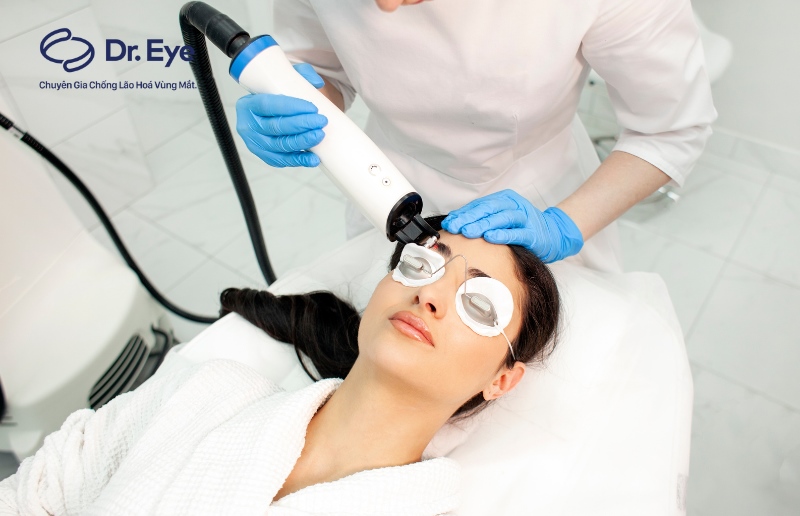
Using Laser Therapy
Typically, after 8 weeks (from the time of upper eyelid surgery) and if you have applied scar prevention cream/medication as directed but the condition has not improved, laser treatment should be considered. Some types of lasers that help reduce scar size and alleviate itching include CO2 laser, Neodymium laser, PDL (Vbeam Prima) dye laser, and cold laser (UltraClear)…
However, it is important to note that laser therapy is only a supportive measure to prevent the formation of unsightly scars from increasing in size and to lighten skin tone, not to completely remove scars from the eyelid crease. Therefore, to effectively address scars, please contact a doctor to develop an appropriate treatment plan that combines laser with other suitable methods.
3.3. Steroid Injections
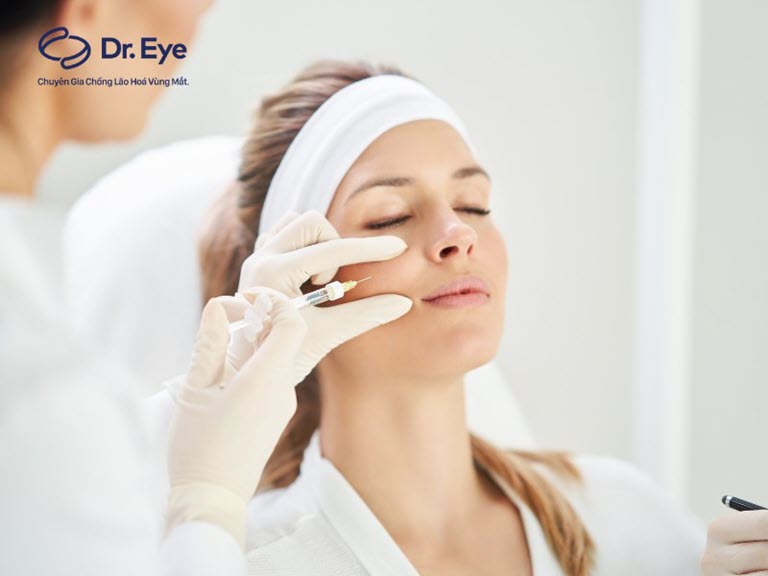
In cases where new scars have formed and are still small, you can address them by receiving steroid injections. The active ingredient works to inhibit the inflammatory process and promote vasoconstriction, thereby flattening keloid scars.
Although this method is effective in addressing scars, it may cause abnormal pigmentation changes, leading to darkened and uneven skin tone. Therefore, you need to choose a reliable facility and an experienced doctor for the procedure.to ensure the correct dosage and proper technique.
3.4. Second Eyelid Surgery
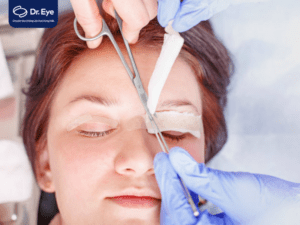
If the eyelid has significant hypertrophic scarring that cannot be improved by other methods, you should consider revision surgery. At this point, the cosmetic surgeon will completely dissect the scar tissue adhering under the eyelid, then adjust the eyelid crease and close it with fine sutures.
In general, this is a fairly complex procedure, so you need to choose a reputable aesthetic clinic with a team of doctors who have the necessary expertise in treating eyelid concerns to effectively address the current scarring and create a new, clear, and harmonious eyelid crease.
4. How to Prevent Hypertrophic Scarring After Eyelid Surgery
The best way to avoid unsightly hypertrophic scarring after eyelid surgery is to choose a reputable clinic with skilled doctors who perform the technique correctly from the start. This should be combined with careful post-operative care and nutrition.
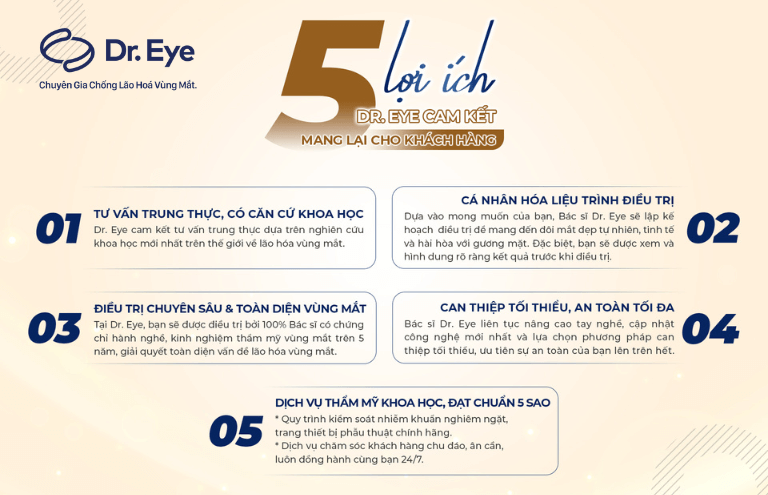
Known as a specialized Eye Rejuvenation Center, Dr. Eye is ready to accompany all middle-aged women on their journey to regain youthful beauty with the following outstanding advantages:
In addition to eyelid surgery, if unfortunately, the client’s eyelids have concerns but have not yetIf you know where to get eyelid revision surgery, rest assured that Dr. Eye also offers eyelid revision surgery, utilizing modern technology at an affordable cost.
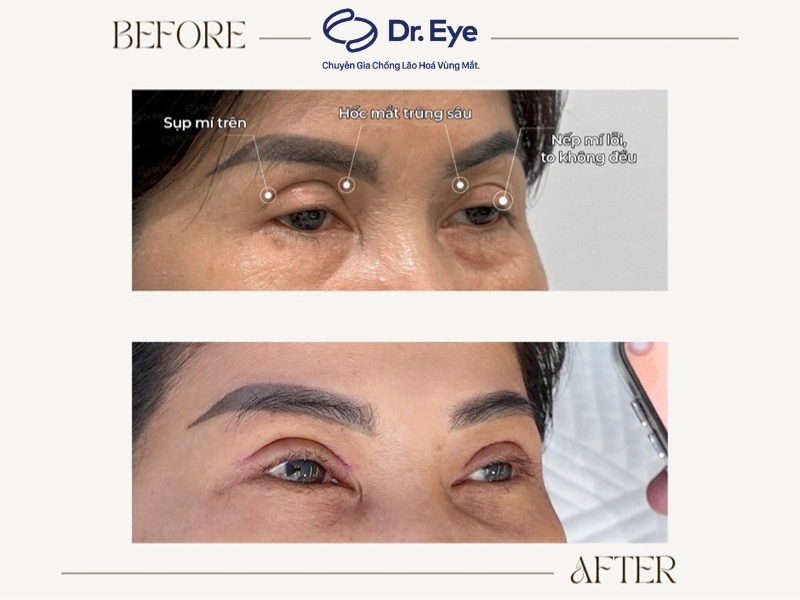
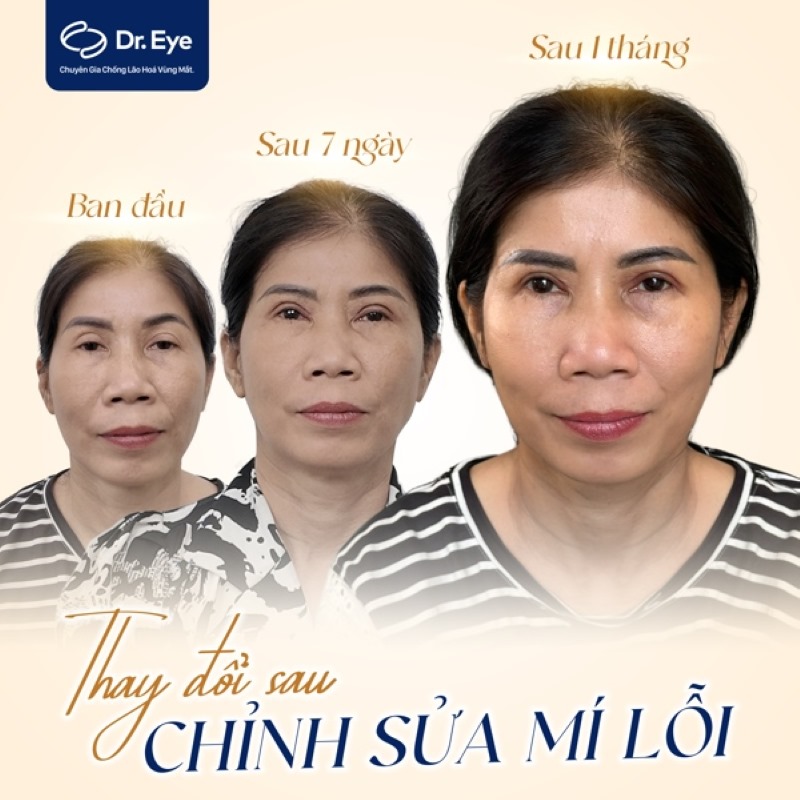
This has been verified by client Lê Thị Thanh Phương, who came to the clinic with unsightly scars at the outer corners of her eyelids, causing aesthetic concerns and excess skin. After a thorough examination and consultation, Ms. Phương achieved a new eyelid crease that is well-defined and effectively addressed her wrinkles.
Similarly, facing issues with her eyelid surgery that left her eyes looking aged, Nguyễn Thị Loan placed her trust in Dr. Eye after two years of contemplating whether to correct her eyelids. The skilled medical team proactively designed a new eyelid crease, closely accompanying her before, during, and after the surgery, resulting in the desired outcome of naturally round eyelid creases.
In addition to choosing a reputable clinic, clients should also pay attention to the following:
- Gently clean the wound after eyelid surgery daily with saline solution.
- Avoid direct contact or applying strong pressure to the newly operated eyelid area.
- Limit the use of cosmetics on the eye area for at least 2 weeks after surgery.
- Use pain relief and antibiotics as directed by your doctor.
Request a callback for consultation
The above is the expert response from Dr. Eye regarding the concern of what to do if eyelid surgery results in hypertrophic scars. In general, clients can be confident that even with a tendency for hypertrophic scars, modern aesthetic techniques and technologies can effectively address this issue. Additionally, if scarring occurs from a previous eyelid surgery, a reputable clinic like Dr. Eye still has appropriate revision solutions to help you achieve more attractive eyes.
References
- Mayo Clinic Staff. 06 13 2023. Keloid scar. https://www.mayoclinic.org/diseases-conditions/keloid-scar/symptoms-causes/syc-20520901 (accessed 06/08/2024)
- National Health Service. 02 07 2023. Keloid scars. https://www.nhs.uk/conditions/keloid-scars/ (accessed 06/08/2024)
- Eyelid Surgery, Scar Treatment, Healing and Fading. 11 03 2023. Centre for Surgery. https://centreforsurgery.com/eyelid-surgery-scar-treatment-healing-and-fading/ (accessed 06/08/2024)
- The Aesthetic Surgery Center. BLEPHAROPLASTY SCAR MANAGEMENT: TIPS FOR A SEAMLESS HEALING PROCESS. https://www.aestheticsurgerycenter.com/blog/blepharoplasty-scars (accessed 08/06/2024)
- Frances Gatta, Dayva Segal & Amy Gopal. 22 10 2023. Keloid Scars: Causes and Treatments. https://www.webmd.com/skin-problems-and-treatments/what-are-treatments-for-keloid-scars (accessed 08/06/2024)
- WILL BLEPHAROPLASTY SURGERY LEAVE SCARS ON MY EYELIDS?. https://www.cosmeticsurgeonsofmichigan.net/blog/blepharoplasty-surgery-eyelid-scars/ (accessed 08/06/2024)
Introduction Dr. Eye
Understanding the desire to preserve the youthful beauty of the eyes for middle-aged women, Dr. Eye offers modern solutions to address all aging issues around the eyes such as sagging eyelids, eye bags, crow’s feet,…


Related articles
![[FAQ] Can I eat peanuts after eyelid surgery?](https://dreye.vn/wp-content/uploads/2024/07/cat-mi-co-an-dau-phong-duoc-khong-ava.jpg)


 BOOK AN APPOINTMENT


